Is Your Cat Happy 10 Body Language Signs Every Owner Must Know
Cats are often misunderstood. They’re labeled as mysterious, aloof, or even unaffectionate. In reality, cats are highly expressive emotional beings—they just don’t communicate the way humans or dogs do. Where dogs broadcast their feelings loudly, cats speak in quiet signals and subtle movements.
If you want to move from being just a human who lives in the house to a trusted companion, learning how cats communicate is essential.
1. The Cat Eyes: Emotional Signals You Should Never Ignore
A cat’s eyes offer one of the clearest windows into their emotional state.
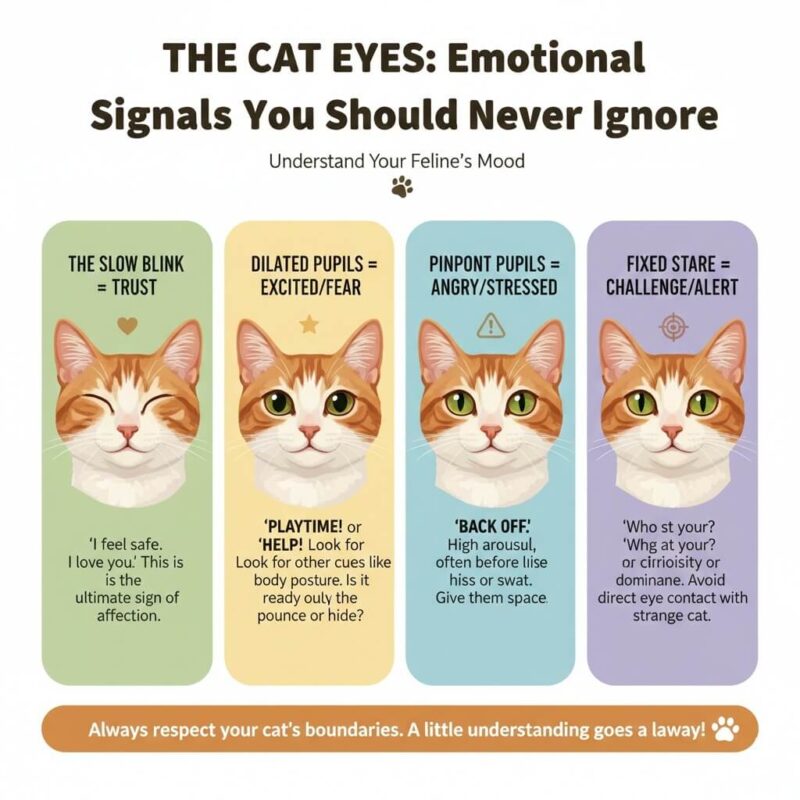
The Slow Blink – The Ultimate Sign of Trust
When a cat slowly closes and opens their eyes while looking at you, it’s often called a “cat kiss.” In nature, closing the eyes makes an animal vulnerable. When your cat does this, they’re communicating:
“I trust you. I feel safe here.”
You can return the gesture by slow blinking back. Many cats respond positively, strengthening your bond over time.
Dilated Pupils – Excitement or Fear
- Large, round pupils may appear during:
- Playtime and sudden excitement
- Fear or anxiety
- High-energy moments like zoomies
Always look at the context. Playful dilated pupils come with loose body posture, while fear-driven dilation is paired with stiff muscles and flattened ears.
The Hard Stare – A Warning Signal
A prolonged, unblinking stare often means discomfort or a challenge. If a cat you don’t know stares at you, it’s best to look away slowly to avoid escalating tension.
2. The Tail: Your Cat’s Emotional Barometer
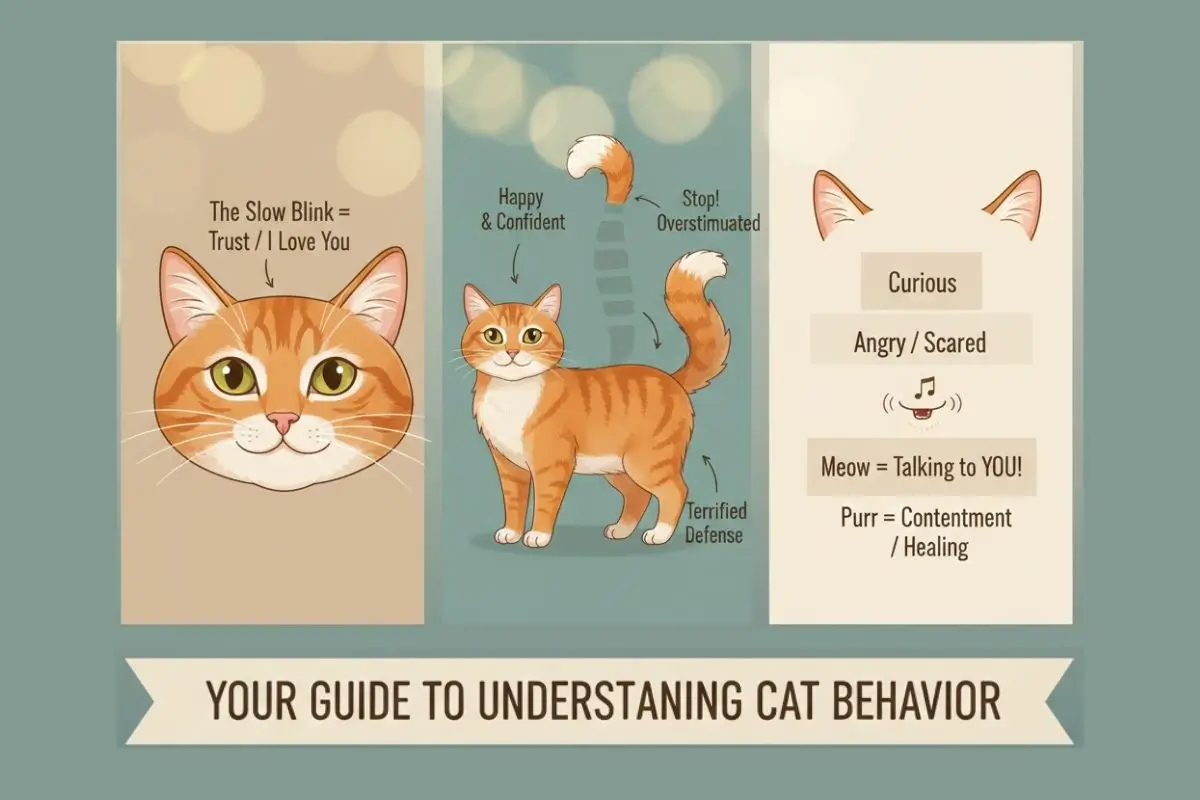
The tail is one of the most honest parts of a cat’s body:
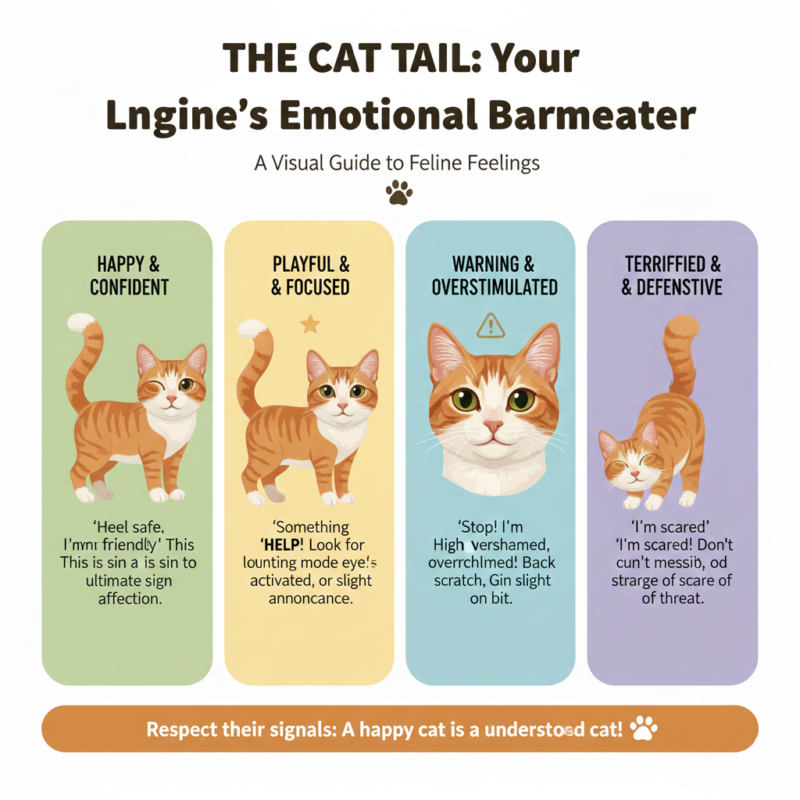
Tail Held High With a Curl
A tail straight up with a hook at the tip means happiness and confidence. This is the feline equivalent of a friendly wave.
Flicking or Twitching Tail Tip
A gently moving tail tip indicates focus or mild annoyance. It’s your cue to pause petting or give space.
Thumping or Lashing Tail
This is a clear “stop” signal. Unlike dogs, tail wagging in cats means overstimulation. Ignoring it may result in a swat or bite.
Puffed-Up Tail
This defensive reaction occurs when a cat feels threatened. The cat is trying to look larger to scare away danger. In this moment, space is critical.
3. Ears: Silent but Powerful Messengers
Cat ears rotate independently and react quickly.
- Forward-facing ears: Calm and curious
- Sideways (“airplane ears”): Nervous or overstimulated
- Flattened ears: Fear or aggression—back away immediately
Ears often change position faster than tails, making them early warning signs.
Also Read: Top 10 Most Popular Cat Breeds in the World: Ragdoll, Persian and More: Check Full List Inside
4. Vocal Communication: Why Cats Meow at Humans
Adult cats rarely meow at other cats. Meowing is a language developed specifically to communicate with people.

Common Sounds Explained
- Soft meow or chirp: Greeting
- Repeated loud meows: Hunger or attention-seeking
- Low growl or hiss: Fear or anger
- Purring: Contentment, but sometimes self-soothing during stress or pain
Always combine sound with body language to understand the message fully.
5. Common “Weird” Behaviors—Decoded
The Midnight Zoomies
Cats are crepuscular, meaning they’re most active at dawn and dusk. Sudden bursts of energy at night are normal. A structured play session before bedtime can help redirect this energy.
Kneading (“Making Biscuits”)
This comforting behavior comes from kittenhood. When adult cats knead, it means they feel safe, relaxed, and emotionally secure.
Bunting (Head Rubbing)
When your cat rubs their face on you, they’re marking you with scent glands. This is a sign of affection and ownership.
Showing the Belly
A belly-up posture signals deep trust—but not always permission to touch. Many cats instinctively protect their belly, so admire rather than touch unless your cat clearly enjoys it.
6. Understanding Personal Space and Consent
Cats value choice and autonomy.
How to Build Trust
- Let your cat initiate contact
- Never force cuddles or remove them from hiding
- Use the “scent handshake”: offer a closed knuckle and let them sniff
- Consent-based interaction builds long-lasting trust.
7. Cat Stress Signals You Should Watch For
Cats hide discomfort well. Warning signs include:
- Excessive hiding
- Sudden aggression
- Changes in appetite
- Over-grooming or litter box issues
These may indicate stress or illness and should never be ignored.
Also Read: Top 10 Most Popular Cat Breeds in the World: Ragdoll, Persian and More: Check Full List Inside
Final Thoughts
Cats are not distant or uncaring—they simply communicate differently. Once you learn to read their eyes, tail, ears, and sounds, you’ll realize how deeply they bond with the people they trust.
A cat’s affection is quiet, intentional, and incredibly meaningful. When you earn it, you’re not just a pet owner—you’re chosen 🐾
About The Author