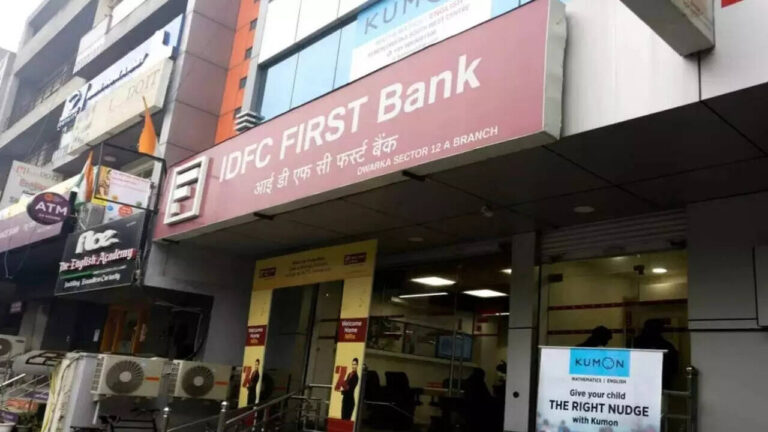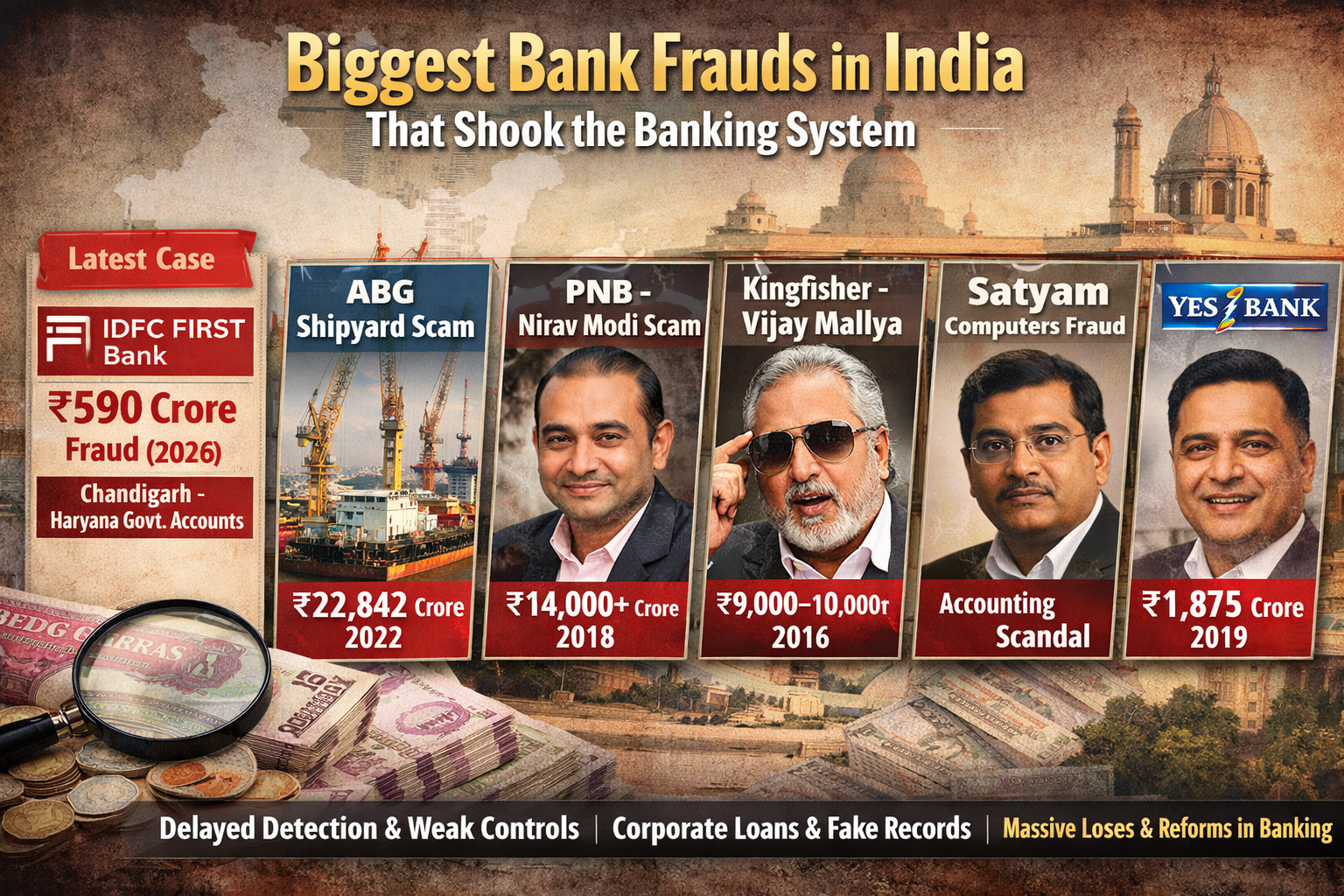
IDFC FIRST Bank Discloses ₹590 Crore Fraud at Chandigarh Branch Full List of Major Bank Frauds of India So Far
IDFC FIRST Bank has reported a suspected ₹590 crore fraud involving accounts of the Haryana government at its Chandigarh branch. This latest incident reflects ongoing challenges with fraud prevention and detection across India’s banking sector, from institutional accounts to loan syndication and corporate defaults.
IDFC FIRST Bank ₹590 Crore Fraud: What We Know So Far
- Location: Chandigarh
- Amount involved: Approximately ₹590 crore
- Accounts affected: Select departments of the Haryana government
- Status: Suspected fraud; forensic audit and police investigation underway
The issue surfaced during account reconciliation following a fund transfer request by a Haryana government department. Internal checks revealed mismatches between reported balances and bank records, leading to the discovery of unauthorised transactions. Four bank officials have since been suspended.
List of Major Bank Frauds of India
Below is a full list of other major bank frauds in India that have shaken public trust and prompted regulatory reforms:
1. The Punjab National Bank–Nirav Modi Scam
- Year exposed: 2018
- Fraud amount: ₹14,000+ crore
- Bank: Punjab National Bank
- Type: Trade finance fraud
- What happened: Fake Letters of Undertaking issued for years without detection
It began quietly inside a single branch of Punjab National Bank in Mumbai. What followed became one of India’s biggest financial shocks.
Diamond merchant Nirav Modi used fake Letters of Undertaking to raise overseas loans without proper collateral. The system trusted manual messages over digital records. For years.
By the time the fraud surfaced in 2018, the exposure had crossed ₹13,500 crore.
Banks scrambled. Regulators rewrote rules. Employees were arrested. Modi fled the country. Extradition efforts continue even today.
The lesson was simple and brutal: if systems don’t talk to each other, fraud finds a way in.
2. The Vijay Mallya–Kingfisher Airlines Collapse
- Year exposed: 2016
- Fraud / default amount: ₹9,000–₹10,000 crore
- Type: Loan default and fund diversion
- Banks involved: SBI, IDBI, others
This one played out in public.
Lavish lifestyles. Private jets. Unpaid salaries. And a sinking airline.
Banks lent over ₹9,000 crore to Kingfisher Airlines, promoted by Vijay Mallya, even as red flags piled up. Loans were repeatedly restructured. Warning signs were ignored.
When the airline collapsed, the money was gone. Mallya left India in 2016. Recovery efforts dragged on. Public anger followed.
It forced banks to rethink how they assess celebrity promoters — and how long “too big to fail” can really last.
3. The ABG Shipyard Case
- Year exposed: 2022
- Fraud amount: ₹22,842 crore
- Type: Corporate loan fraud
- Banks involved: 20+ Indian banks
- What happened: Loan money diverted instead of being used for shipbuilding
This one stunned even seasoned bankers.
In 2022, the CBI named ABG Shipyard in a case involving more than ₹22,000 crore — the largest bank fraud ever reported in India.
The company allegedly diverted loan funds, sold assets without lender consent, and used new loans to repay old ones. Multiple public-sector banks were hit.
What made the case worse was timing. Some banks flagged stress years before the fraud complaint was filed.
The delay raised uncomfortable questions. Who knew? And why did it take so long?
4. The Satyam Computers Scandal
- Year exposed: 2009
- Amount impacted: Thousands of crores (indirect exposure)
- Type: Accounting fraud with banking exposure
This wasn’t a bank fraud in the traditional sense. But banks paid the price.
In 2009, Ramalinga Raju, founder of Satyam Computers, admitted to falsifying accounts for years. Cash balances were inflated. Profits didn’t exist.
Banks had lent based on cooked books. Investors lost billions. India’s IT reputation took a hit.
The fallout led to stricter audit norms, tighter disclosure rules, and deeper scrutiny of corporate balance sheets.
5. The Yes Bank Crisis
- Year exposed: 2019
- Amount involved: ₹1,875 crore (key flagged exposure)
- Type: Corporate governance failure
This wasn’t one single fraud. It was many bad loans, piled one over another.
Aggressive lending. Weak risk controls. Close ties with stressed borrowers.
By 2020, Yes Bank collapsed under the weight of its own balance sheet. The RBI stepped in. A rescue followed.
Investigations later flagged questionable lending practices involving promoters and large corporate groups. It showed how fast things can unravel when growth beats governance.
What These Bank Frauds Have in Common
Different banks. Different years. Same core problems.
- Internal warnings ignored.
- Controls overridden.
- Too much power concentrated in too few hands.
Fraud rarely looks dramatic at the start. It looks routine. A file pushed through. A rule bent “just once.” That’s how it grows.
Why These Cases Still Matter
Every major fraud reshaped banking rules in India.
- After PNB, SWIFT controls tightened.
- After Kingfisher, promoter scrutiny increased.
- After ABG Shipyard, banks faced pressure to act faster on stress signals.
Yet fraud hasn’t disappeared. It’s only changed form.
The Road Ahead
Technology helps. So does regulation. But neither replaces basic vigilance.
Frauds don’t begin with crores. They begin with silence. With someone deciding not to ask a question. Or not to record an entry.
India’s banks have learned hard lessons. The cost was enormous. The challenge now is remembering them — before the next headline breaks.
Quick Takeaways
- India has seen bank frauds ranging from ₹9,000 crore to over ₹22,000 crore
- Delayed detection and weak internal controls remain common factors
- Each scandal forced regulatory and structural reforms
About The Author