How Many Vedas Are There_ Names, Meanings, and More- All You Need To Know
At some point, almost everyone who becomes curious about Indian philosophy asks a very simple question: How many Vedas are there?
It sounds straightforward. But once you begin exploring the answer, you quickly realize that the Vedas are not just ancient texts—they are windows into how early humans tried to understand life, nature, action, and meaning.
The fact that people still search for the Vedas today says something important: these texts continue to speak to human curiosity, even thousands of years later.
So, How Many Vedas Are There?
There are four Vedas.
Together, they form the foundation of Vedas, which lie at the heart of Indian philosophical and spiritual thought.
The four Vedas are:
- Rigveda
- Yajurveda
- Samaveda
- Atharvaveda
Each Veda has a different focus, but they were never meant to stand alone. Think of them as four complementary ways of understanding life—through reflection, action, sound, and everyday experience.
When Were the Vedas Composed?
Many readers naturally wonder about the time period of the Vedas.
Most scholars believe the Vedas were composed between roughly 1500 BCE and 500 BCE, though parts of them may be even older. They did not appear all at once. Instead, they evolved gradually over centuries as knowledge was refined, remembered, and passed on.
This long process explains why the Vedas feel layered—practical in some places, poetic in others, and deeply reflective elsewhere.
Why the Vedas Are Not “Just Books”
It’s important to understand that the Vedas were not written like modern books.
For centuries, they were preserved entirely through oral tradition. Teachers recited the verses, and students memorized them with extraordinary precision. Special chanting methods ensured that pronunciation, rhythm, and meaning remained intact.
This wasn’t just about memory. In ancient India, sound was believed to carry meaning and power. Knowledge was treated as something living—something that had to be cared for.
What Is Inside Each Veda?
Although each Veda has its own character, they share a common structure. Very simply put, they include:
- Hymns and verses expressing praise and curiosity
- Ritual explanations guiding actions and ceremonies
- Reflective sections meant for contemplation
- Philosophical ideas that later developed further
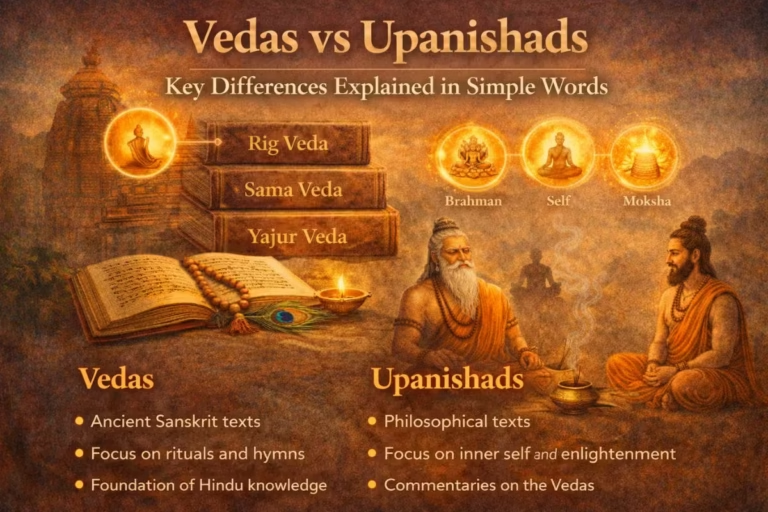
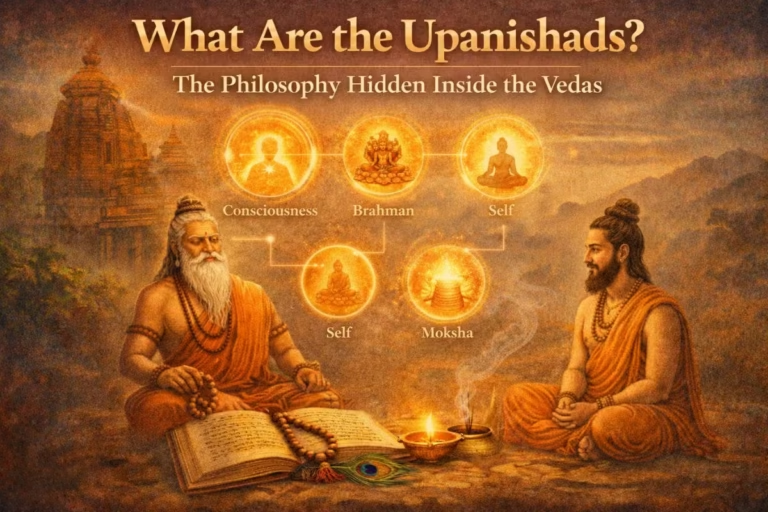
Some of the deepest philosophical reflections later appeared more clearly in texts like the Upanishads, which built upon Vedic thought.
1. Rigveda: Curiosity and Wonder
The Rigveda is the oldest of the four Vedas.
It is filled with hymns addressed to natural forces such as fire, wind, rain, and the sky. These hymns are not strict instructions—they sound more like thoughtful conversations with the universe.
What makes the Rigveda special is its sense of wonder. It openly asks questions:
- Where did everything come from?
- Is there an order behind the universe?
- Do even the gods know all the answers?
This willingness to question makes the Rigveda feel surprisingly modern.
2. Yajurveda: Action and Intention
The Yajurveda focuses on action—especially rituals and ceremonies.
But its deeper message goes beyond ritual. It emphasizes intention. Actions matter, but the mindset behind them matters just as much.
This idea still feels relevant today. Whether in work, relationships, or personal choices, the Yajurveda reminds us that how we act shapes both our inner world and the outer one.
3. Samaveda: The Power of Sound
The Samaveda is closely connected to music and chanting.
Many of its verses come from the Rigveda, but they are arranged to be sung. This shows how important sound and rhythm were in ancient thought. Chanting was believed to calm the mind and create harmony.
Even today, music and sound play a powerful role in meditation, prayer, and emotional well-being—an idea the Samaveda explored long ago.
4. Atharvaveda: Everyday Life and Human Concerns
The Atharvaveda feels the most grounded in daily life.
It talks about health, fear, peace, family, and personal struggles. Rather than focusing only on cosmic ideas, it acknowledges that human life is complex and sometimes difficult.
Many modern readers find the Atharvaveda relatable because it meets people where they are, not where they “should” be.
Quick Summary: Type of Four Vedas and Their Features
| Veda | Main Focus | Key Features |
| Rigveda | Hymns & praise | Poetic verses dedicated to natural forces like fire, sun, wind, and rain |
| Yajurveda | Rituals & action | Instructions for ceremonies, with emphasis on intention behind actions |
| Samaveda | Music & chanting | Verses arranged for singing and melodic recitation |
| Atharvaveda | Everyday life | Prayers and reflections on health, fear, peace, family, and daily struggles |
What Do the Names of the Vedas Mean?
The names of the Vedas reflect their nature:
- Rig relates to praise and poetic verse
- Yajur is connected to action and sacrifice
- Sama refers to melody and song
- Atharva is linked to everyday wisdom
Together, they cover thinking, doing, feeling, and living—almost like a complete map of human experience.
A Common Misconception About the Vedas
The Vedas are often misunderstood as rigid or rule-based texts.
In reality, they contain doubt, curiosity, and open-ended reflection. They show that questioning was always a part of the tradition—not something to be avoided.
This openness is one reason the Vedas have endured.
Why the Four Vedas Still Matter Today
You don’t need to follow ancient rituals to learn from the Vedas.
Their lasting value lies in their approach to life:
- observing before reacting
- acting with awareness
- respecting nature
- understanding that actions have consequences
Many ideas discussed today in mindfulness, ethics, and well-being echo thoughts first explored in the Vedas.
FAQs: People Often Ask
How many Vedas are there exactly?
There are four Vedas: Rigveda, Yajurveda, Samaveda, and Atharvaveda.
Which Veda is the oldest?
The Rigveda is considered the oldest.
Are the four Vedas still relevant today?
Yes. Their ideas about balance, intention, and awareness remain meaningful.
Do I need to read all four Vedas?
Not at all. Many people begin with summaries or simplified explanations.
A Thoughtful Closing
The Vedas do not rush the reader. They don’t promise instant answers or easy solutions.
Instead, they invite patience, reflection, and curiosity.
Perhaps that is why, even in a fast-moving world, people continue to return to them—not for certainty, but for understanding.
And sometimes, understanding is enough.
About The Author