Source - AI
The Bhagavad Gita is one of the most respected spiritual texts in the world. People read it for guidance, peace, and understanding of life. But many readers want to know its background. Who wrote the Bhagavad Gita? When was it written? And why is it still important today? Let’s explore its history in simple words.
Who Wrote the Bhagavad Gita?
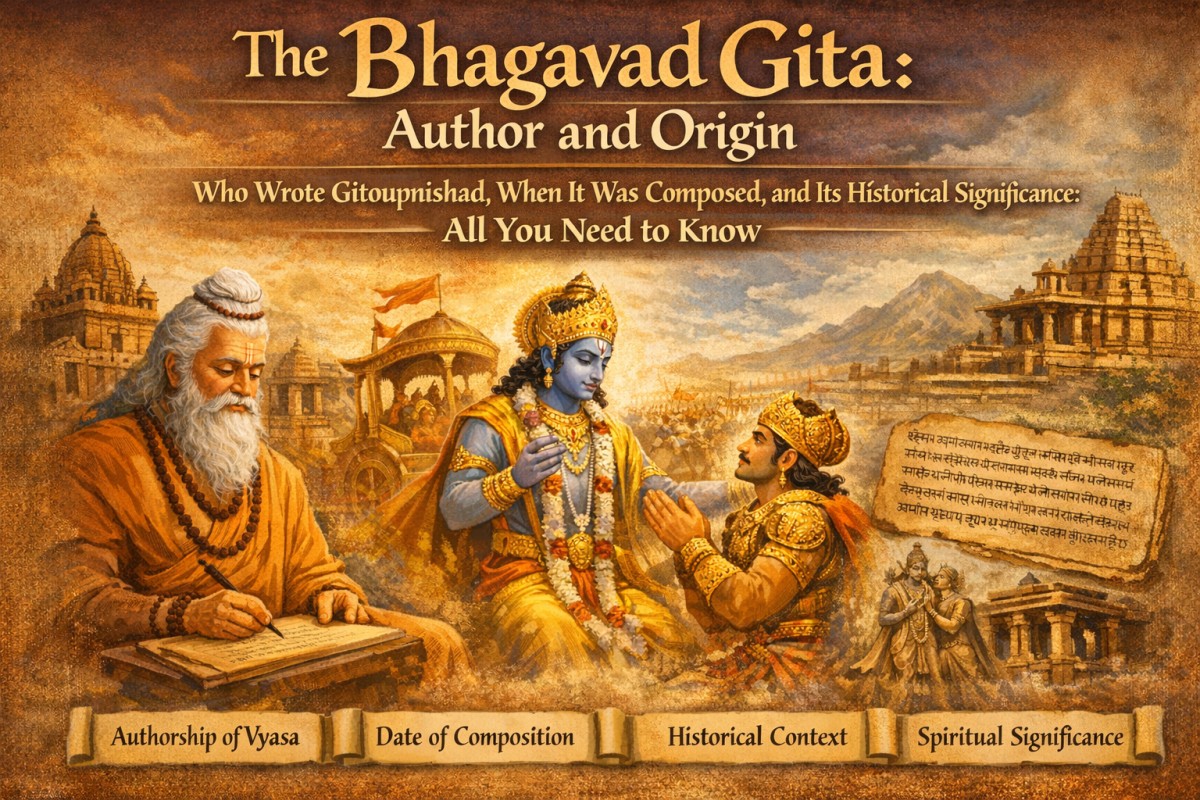
The Bhagavad Gita was written by Maharishi Ved Vyasa, also known as Veda Vyasa. He was a great sage of ancient India and is credited with writing the Mahabharata, one of the longest epics in history.
The Bhagavad Gita is not a separate book. It is a small but powerful part of the Mahabharata and appears in the Bhishma Parva. It contains 700 verses written in Sanskrit and is divided into 18 chapters.
Although Lord Krishna speaks the teachings in the Bhagavad Gita, Ved Vyasa is considered the author because he composed and recorded the text.
When Was the Bhagavad Gita Written?
There is no exact date for when the Bhagavad Gita was written. Most historians believe it was composed between 500 BCE(Before Common Era) and 200 BCE.
In ancient India, knowledge was passed down orally from teacher to student for many generations. The teachings of the Bhagavad Gita were first spoken on the battlefield and later written down by Ved Vyasa.
Historical Background of the Bhagavad Gita
The Bhagavad Gita is set on the battlefield of Kurukshetra, just before the great war between the Pandavas and the Kauravas.
Arjuna, a brave warrior, feels confused and emotionally weak when he sees his own relatives, teachers, and friends on the opposite side. He is unsure whether fighting the war is right or wrong.
At this moment, Lord Krishna, his charioteer, gives him spiritual guidance. Their conversation about duty, life, and truth becomes the Bhagavad Gita.
What Makes the Bhagavad Gita Special
The Bhagavad Gita is special because it talks about real-life problems that people face every day. It does not teach us to escape from responsibilities. Instead, it teaches us how to face life with courage, wisdom, and calmness.
The Gita explains deep ideas like karma, duty, and the soul in a very simple and practical way. Its main message is to do your work honestly, control your mind, and stay balanced in success and failure.
Another reason the Bhagavad Gita is special is that its teachings are universal. A student, a working professional, or a leader—anyone can apply its lessons in daily life to find peace and purpose.
Important Facts About the Bhagavad Gita
- The Bhagavad Gita has 700 verses
- It is divided into 18 chapters
- It is part of the Mahabharata
- It is written in Sanskrit
- It has been translated into many languages around the world
Why Knowing the History of the Bhagavad Gita Matters
Understanding who wrote the Bhagavad Gita and when helps us appreciate its depth and value. Even though it was written thousands of years ago, its teachings are still helpful in today’s fast and stressful life.
The wisdom of Ved Vyasa and the guidance of Lord Krishna continue to inspire people to live a meaningful and balanced life.
Conclusion
The Bhagavad Gita was written by Maharishi Ved Vyasa and composed thousands of years ago. It is a timeless text that combines history, philosophy, and life guidance.
Even today, the Bhagavad Gita remains a powerful source of wisdom for anyone seeking clarity, peace, and purpose in life.
Disclaimer:
This content is for general informational purposes about spiritual teachings in India and worldwide. It is not professional or personal advice. For guidance, consult authentic sources or qualified spiritual teachers.
About The Author