The Bhagavad Gita Chapters Explained Source - AI
The Bhagavad Gita, often called the “Song of God,” is one of the most sacred books of India. It is part of the great epic Mahabharata and is written as a conversation between Lord Krishna and Arjuna on the battlefield of Kurukshetra. But this war is not just about kingdoms—it’s also about the battles we all fight inside ourselves.
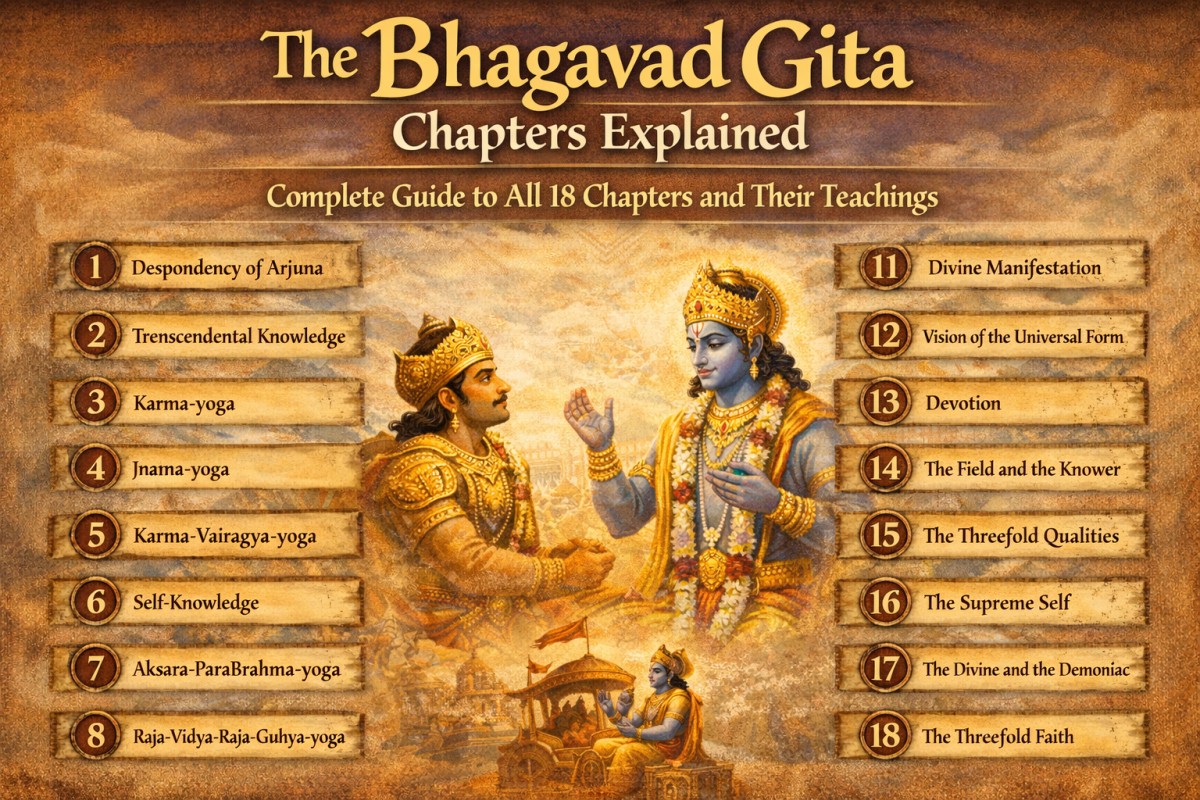
In its 18 chapters, the Gita teaches lessons on life, duty, and inner peace. Let’s look at what each chapter tells us.
1. Arjuna Vishada Yoga – The Yoga of Arjuna’s Despair
The first chapter begins with Arjuna’s confusion. Seeing his loved ones on both sides, he feels weak and refuses to fight. This shows how we often struggle when faced with tough choices in life.
2. Sankhya Yoga – The Yoga of Knowledge
Krishna starts explaining the truth of life. He reminds Arjuna that the soul never dies—it only changes bodies. This teaches us to stay calm and do our duty without fear.
3. Karma Yoga – The Yoga of Action
Krishna says that action is necessary. But we should act without selfish desires. Do your work honestly, and leave the results to God.
4. Jnana Karma Sanyasa Yoga – The Yoga of Knowledge and Action
Here, Krishna explains how knowledge helps purify our actions. When we act with wisdom and understanding, even ordinary work becomes spiritual.
5. Karma Sanyasa Yoga – The Yoga of Renunciation
True renunciation is not about leaving your work—it’s about giving up your attachment to results. Work hard, but stay balanced in success and failure.
6. Dhyana Yoga – The Yoga of Meditation
Krishna teaches the power of meditation. A calm mind leads to peace. By focusing on God and staying disciplined, we find happiness that doesn’t depend on the outside world.
7. Jnana Vijnana Yoga – The Yoga of Knowledge and Wisdom
Here, Krishna talks about both worldly and spiritual knowledge. Understanding God and the universe helps us see His presence in everything.
8. Aksara Brahma Yoga – The Yoga of the Imperishable Absolute
This chapter explains how the soul is eternal and how remembering God at the time of death leads to liberation.
9. Raja Vidya Raja Guhya Yoga – The Yoga of Royal Knowledge and Secret Wisdom
Krishna reveals that devotion is the easiest and highest path to reach Him. Love and faith are greater than rituals.
10. Vibhuti Yoga – The Yoga of Divine Glories
Krishna tells Arjuna about His divine forms and powers in the world. Everything beautiful, powerful, or wise is a spark of His glory.
11. Vishwaroopa Darshana Yoga – The Yoga of the Vision of the Universal Form
Krishna shows Arjuna His universal form—countless arms, faces, and beings all within Him. It reveals that God is everywhere and in everything.
12. Bhakti Yoga – The Yoga of Devotion
True devotion means loving God with a pure heart. Krishna says that a devotee who is kind, humble, and fearless is very dear to Him.
13. Kshetra Kshetragna Vibhaga Yoga – The Yoga of the Field and the Knower of the Field
The body is the field, and the soul is the knower. Understanding this difference leads to self-awareness.
14. Gunatraya Vibhaga Yoga – The Yoga of the Three Gunas
Krishna explains the three qualities or “gunas” that rule human nature: sattva (goodness), rajas (passion), and tamas (ignorance). Knowing them helps us rise above them.
15. Purushottama Yoga – The Yoga of the Supreme Person
The chapter describes God as the eternal tree whose roots are above and branches below. Understanding the Supreme Being frees us from worldly traps.
16. Daivasura Sampad Vibhaga Yoga – The Divine and Demonic Qualities
Here, Krishna describes two kinds of people—those with divine qualities like kindness and truth, and those with negative qualities like anger and greed. We should choose the divine path.
17. Shraddhatraya Vibhaga Yoga – The Threefold Faith
Faith differs according to a person’s nature. True faith leads us closer to God and gives strength to live with purpose.
18. Moksha Sanyasa Yoga – The Yoga of Liberation
The final chapter sums up all the lessons. By living with love, self-control, and faith, a person reaches moksha—freedom from the cycle of birth and death.
The Timeless Message
The Bhagavad Gita teaches us that life is a journey of balance—between action and peace, success and failure, body and soul. It tells us to perform our duty, stay true to our values, and trust our inner guide. Even today, its words inspire millions to live with clarity, courage, and compassion.
Disclaimer:
This content is for general informational purposes about spiritual teachings in India and worldwide. It is not professional or personal advice. For guidance, consult authentic sources or qualified spiritual teachers.
About The Author