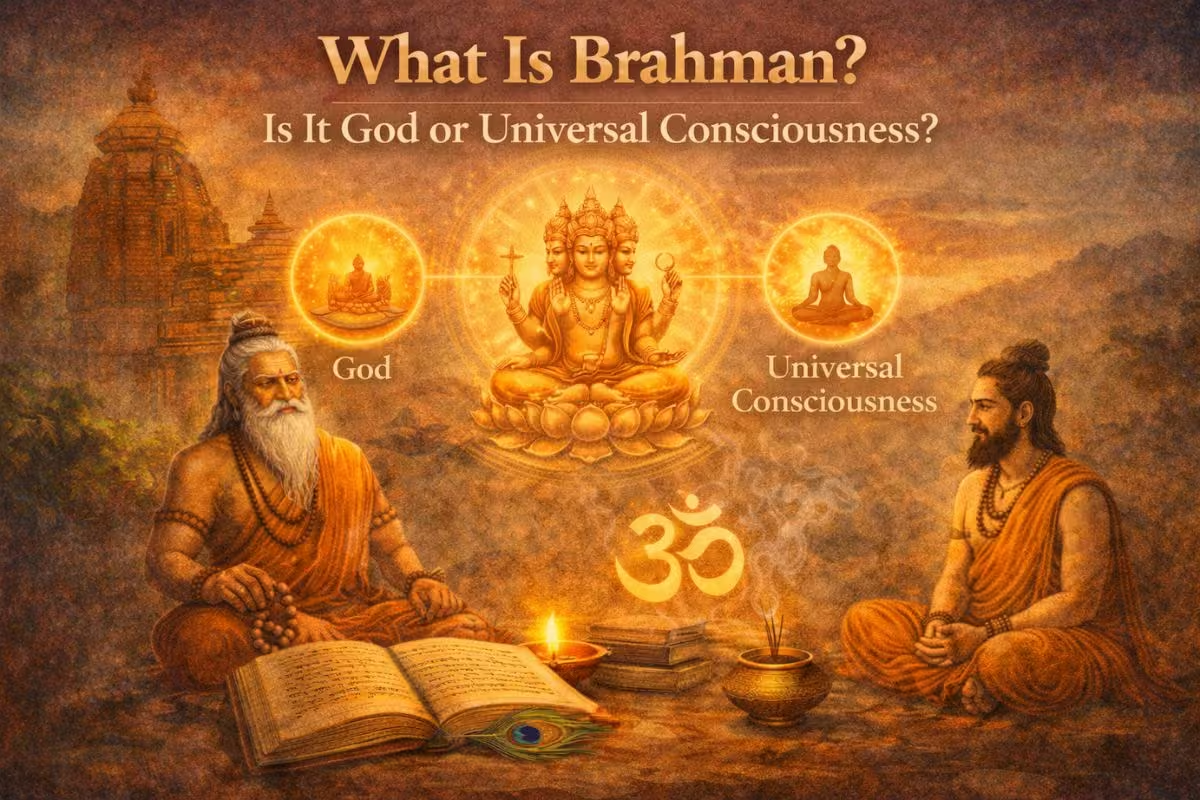
What Is Brahman_ Is It God or Universal Consciousness
When people first come across the word Brahman in Indian philosophy, the confusion is understandable.
Is Brahman a god?
Is it a cosmic power?
Is it something spiritual people believe in?
The Upanishads don’t give a quick, simple definition—and that’s intentional. Brahman isn’t meant to be pictured or worshipped in the usual way. It’s meant to be understood slowly, through reflection.
Brahman Meaning in Simple Words
In the Upanishads, Brahman refers to the ultimate reality behind everything.
Not a person.
Not a shape.
Not a being sitting somewhere in the universe.
Brahman is described as that which exists before all forms and remains after all changes.
In everyday language, you could think of Brahman as the background of existence itself.
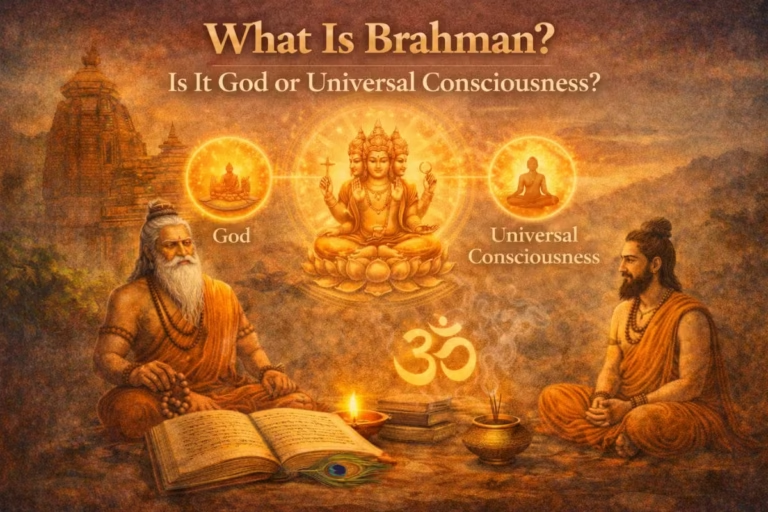
Is Brahman the Same as God?
This is where many people get stuck.
Brahman is not a god in the human sense—not someone who thinks, decides, rewards, or punishes.
Instead:
- Gods in Indian tradition are expressions within reality
- Brahman is the reality that allows everything to exist
So while Brahman can be approached spiritually, it’s closer to universal consciousness than a personal deity.
How the Upanishads Describe Brahman
The Upanishads often explain Brahman by saying what it is not.
They say:
- not limited
- not born
- not dying
- not visible
One famous line describes Brahman as “that from which words return, unable to describe it.”
In other words, language can point toward Brahman—but can’t fully capture it.
A Simple Example
Imagine the ocean.
- Waves rise and fall
- Each wave looks separate
- But all waves are made of the same water
In this example:
- Waves are individual forms
- Water is Brahman
Forms change. The underlying reality does not.
Brahman and Atman: The Key Connection
One of the central teachings of the Upanishads is this:
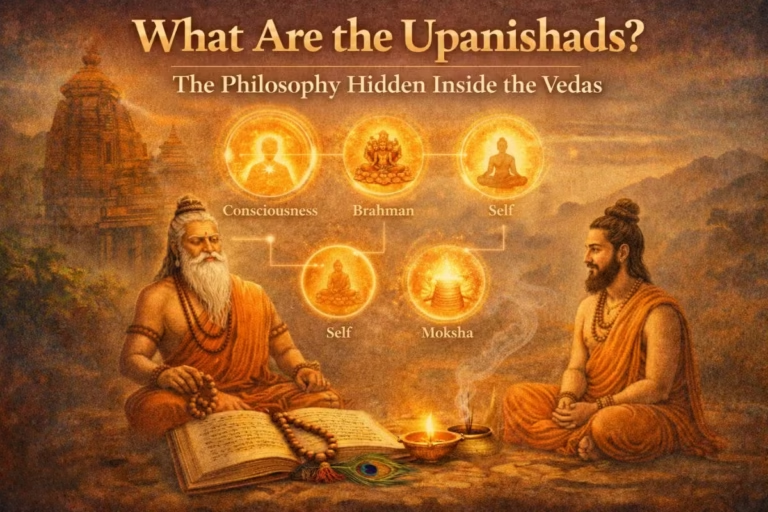
Atman (the inner self) and Brahman (ultimate reality) are not different.
This doesn’t mean your personality is divine. It means the deepest awareness within you is part of the same reality that exists everywhere.
Understanding this connection is said to reduce fear, separation, and suffering.
Why Brahman Is Not Meant to Be Worshipped Like a God
The Upanishads don’t focus on praying to Brahman.
Instead, they focus on:
- understanding
- awareness
- direct experience
Brahman is not something you reach—it’s something you recognize.
This is why the Upanishads lean more toward inquiry than belief.
Why This Idea Still Matters Today
Modern science studies the universe from the outside. The Upanishads explored it from the inside.
The idea of Brahman offers a way to think about:
- unity beneath diversity
- consciousness beyond identity
- meaning without rigid belief
That’s why people across cultures still turn to this concept—not for answers, but for perspective.
Common Beginner Questions
Is Brahman religious?
It comes from ancient Indian texts, but it’s philosophical rather than dogmatic.
Is Brahman the same as the universe?
Not exactly. The universe is a form; Brahman is the underlying reality behind it.
Can Brahman be experienced?
The Upanishads suggest it’s known through awareness and insight, not through the senses.
A Thoughtful Ending
The Upanishads don’t ask you to believe in Brahman.
They ask you to notice what never changes, even as everything else does.
Whether you call it God, consciousness, or reality, Brahman points to the same quiet truth:
there is something deeper than names—and it’s already here.
About The Author