History of Christmas Trees
As Christmas 2025 approaches, millions of people worldwide are getting ready to decorate their homes with Christmas trees — a symbol of joy, celebration, and the festive spirit. But have you ever wondered how the tradition of Christmas trees began? From ancient rituals to modern decorations, the history of Christmas trees is fascinating and deeply cultural.
Origins of Christmas Trees
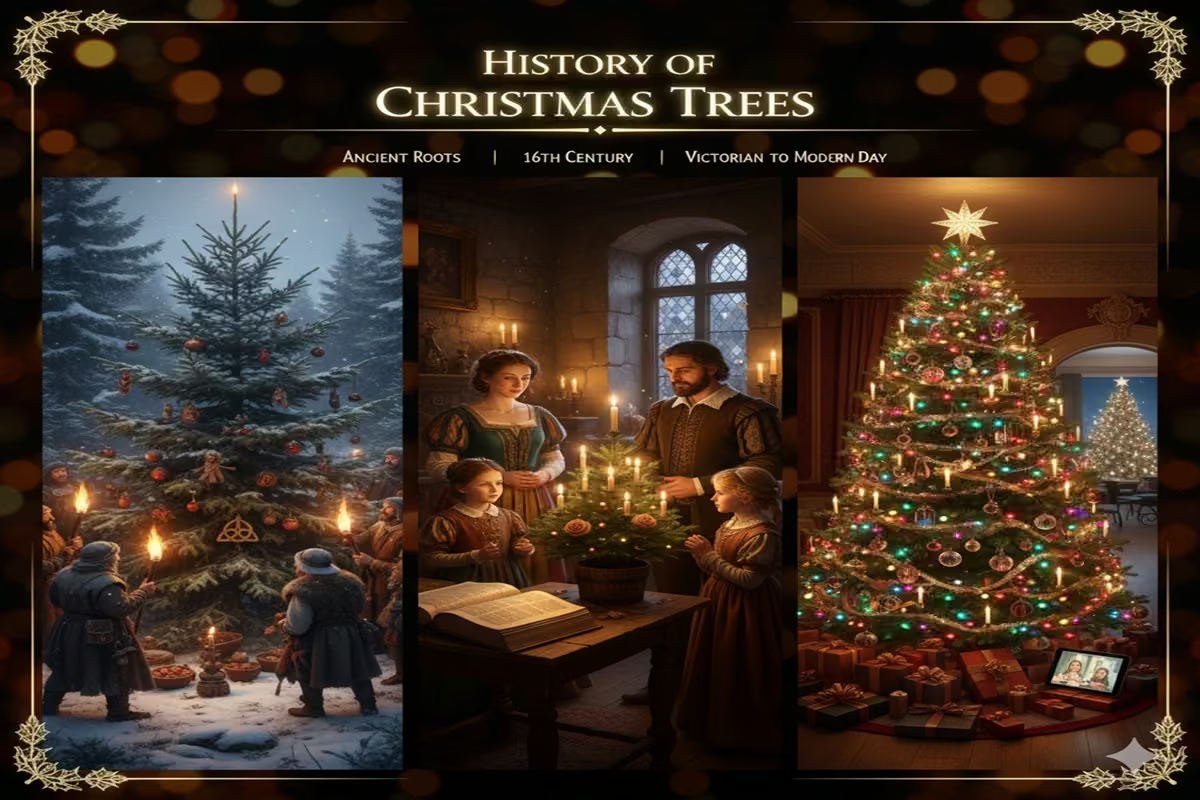
The tradition of decorating evergreen trees dates back centuries before the birth of Jesus Christ. Ancient civilizations, including Egyptians, Romans, and Druids, used evergreen plants during winter solstice celebrations as symbols of life, hope, and renewal, since these trees remained green even in the harsh winter months.
- Romans: Used evergreen boughs to celebrate Saturnalia, a festival honoring the god Saturn.
- Druids (Celtic tribes): Believed evergreen trees represented protection and eternal life.
Christmas Trees in Christianity
The modern Christmas tree tradition began in 16th century Germany, where devout Christians brought decorated trees into their homes. Some key points:
- Martin Luther, a Protestant reformer, is credited with first adding candles to a tree, inspired by the beauty of stars shining through evergreen branches.
- Initially, trees were decorated with edible items like apples, nuts, and candies.
- By the 18th and 19th centuries, the Christmas tree tradition spread across Europe and eventually reached North America.
How Christmas Trees Reached India
The tradition reached India during the British colonial era, especially in cities with significant Christian populations, including:
- Goa – Portuguese influence brought decorated trees and church celebrations.
- Kolkata – British Christian communities introduced the custom in the 19th century.
- Mumbai & Chennai – Large Anglo-Indian and Christian communities adopted Christmas tree decoration as part of home celebrations.
Today, Christmas trees are widely used across urban India, both in homes and in public spaces such as shopping malls, offices, and churches.
Popular Christmas Tree Traditions Around the World
- Germany: Known for elaborate handmade ornaments and Advent decorations.
- United States: Famous for the National Christmas Tree in Washington, D.C. and extravagant decorations.
- United Kingdom: Traditional real and artificial trees with tinsel, lights, and baubles.
- India: Mixture of real, artificial, and LED-decorated trees, especially in Goa, Mumbai, Delhi, and Bangalore.
Fun Facts About Christmas Trees
- The world’s tallest Christmas tree is over 221 feet tall (Brazil, 2012).
- Modern artificial trees date back to Germany in the 19th century.
- Many countries now use LED lights, eco-friendly decorations, and theme-based designs.
- The pine, fir, and spruce are the most commonly used tree varieties globally.
Why We Still Celebrate With Christmas Trees
- Represents eternal life and hope, rooted in both pagan and Christian symbolism.
- Brings families together for decorating and festive activities.
- Serves as a focal point for celebrations in homes, offices, and public spaces.
- Enhances the Christmas ambiance, adding joy, lights, and color.
FAQs – History of Christmas Trees
Q: When was the first Christmas tree decorated?
Records indicate Christmas trees were decorated in Germany as early as the 16th century.
Q: Why are Christmas trees evergreen?
Evergreens symbolize eternal life, protection, and hope, even during winter.
Q: How did Christmas trees come to India?
The tradition was introduced by Portuguese and British Christian communities during colonial times.
Conclusion
The Christmas tree is more than just a decorative item — it is a symbol of joy, life, and togetherness that has evolved over centuries. From ancient pagan rituals to modern Indian urban celebrations, the evergreen tree continues to unite people worldwide during the festive season.
Sources:
- History.com – History of Christmas Trees
- National Christmas Tree Association, USA
- Church of England – Christmas Traditions
- Local Indian church archives
About The Author