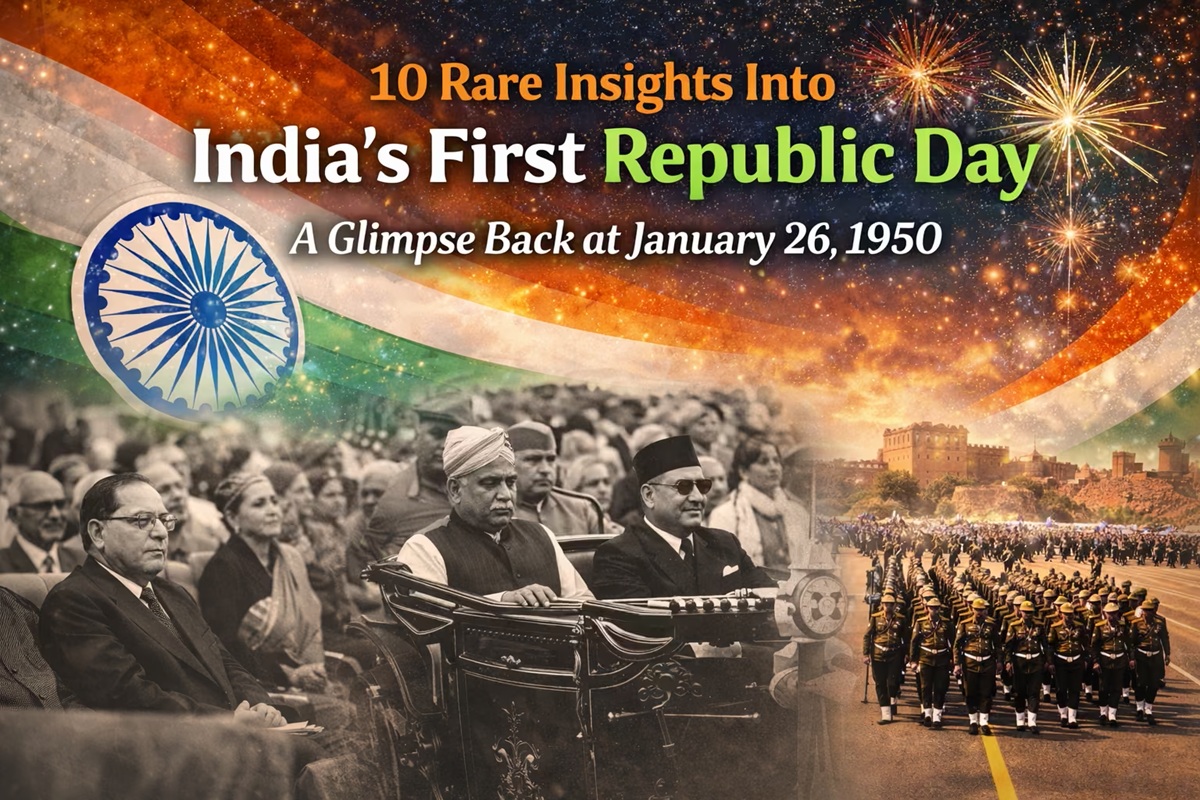
As India prepares to celebrate its 77th Republic Day on January 26, 2026, the grandeur of the parade at Kartavya Path (formerly Rajpath) is breathtaking. The sight of marching contingents, floats, cultural performances, and vibrant crowds has become synonymous with national pride.
But rewind 76 years, and the first Republic Day in 1950 was an entirely different spectacle—a simpler, yet profoundly emotional celebration that captured the birth of a new nation. Here are 10 rare insights and “visual snapshots” that bring that historic day to life.
1. The Venue: Irwin Stadium, Not Rajpath
Contrary to what many imagine, the inaugural parade did not march down Rajpath. The first celebrations took place at the Irwin Amphitheatre (today’s Major Dhyan Chand National Stadium), with around 15,000 attendees witnessing history unfold. Rajpath only became the official venue in 1955.
2. The First Chief Guest: President Sukarno
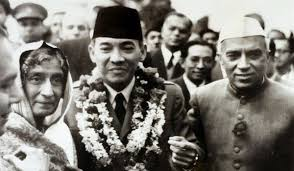
India’s first Republic Day emphasized solidarity among newly independent nations. The first Chief Guest was President Sukarno of Indonesia, who rode alongside Dr. Rajendra Prasad in a horse-drawn carriage—a symbol of the emerging “Global South” forging connections after colonial rule.
3. The 35-Year-Old State Coach
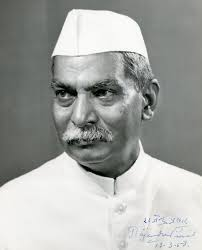
Dr. Rajendra Prasad did not arrive in a modern motorcade. Instead, he rode in a renovated 35-year-old horse-drawn carriage, adorned for the first time with the Ashoka Emblem, replacing the British Royal insignia. This carriage symbolized both continuity and a bold break from the colonial past.
4. Delhi Transformed into a “Fairyland”
Archival accounts describe Delhi as a fairyland of lights. Iconic landmarks like Connaught Place, India Gate, and Old Delhi Railway Station were adorned with thousands of lamps. Citizens stayed out all night to witness this magical spectacle—a rare visual delight in post-independence India.
5. A Salute of 31 Guns
Today, we are familiar with the 21-gun salute, but the birth of the Republic in 1950 was announced with a 31-gun salute. The deafening roar marked the swearing-in of Dr. Rajendra Prasad at 10:24 AM in the Durbar Hall, a thunderous tribute to the nation’s newfound sovereignty.
6. The Last Governor-General’s Proclamation
Before the parade began, C. Rajagopalachari, the outgoing Governor-General, read the proclamation of the Republic of “India, that is, Bharat.” That moment marked the official end of India’s status as a British Dominion.
7. The Backdrop of Purana Qila
Unlike today’s modern skyline, the Purana Qila (Old Fort) stood as a majestic backdrop to the first parade. Its ancient walls, looming beside the Irwin Stadium, created a stark yet beautiful contrast between India’s timeless history and its nascent Republic.
8. 3,000 Bravehearts
The first military parade was modest but meaningful. Around 3,000 personnel from the Army, Navy, Air Force, and police participated. There were no tanks, missiles, or flypasts—just precision marching, vibrant uniforms, and soul-stirring music.
9. Dr. Ambedkar in the Front Row
Dr. B.R. Ambedkar, the architect of the Constitution, sat among the dignitaries, quietly witnessing his three-year labor of love come alive. The images capture a solemn, reflective Ambedkar—the man who transformed India’s dreams into law.
10. The People’s Parade
Unlike today’s high-security and cordoned zones, the first Republic Day was intimately shared with the public. People perched on rooftops, tree branches, and even bus tops along the five-mile route from Rashtrapati Bhavan to the stadium to catch a glimpse of their first President. The connection between the people and the nation was palpable.
A Moment Frozen in Time
The first Republic Day of 1950 was simple, heartfelt, and profoundly symbolic. It celebrated not just the Constitution but the spirit of a newly independent India—a nation ready to chart its own destiny.
As we march into the 77th Republic Day in 2026, the echoes of 1950 remind us that beneath every parade, flag, and salute lies a story of courage, vision, and unity.
About The Author