Vedas vs Upanishads_ Key Differences Explained in Simple Words
People often hear the words Vedas and Upanishads together and assume they mean the same thing. They’re connected—deeply—but they are not the same.
Think of it this way:
If the Vedas are about how to live in the world, the Upanishads are about understanding who is living that life.
Let’s break this down simply, without heavy philosophy or textbook language.
Big Picture First
The Vedas came first. They focus on life as it is lived—nature, society, rituals, duties, and harmony with the universe.
The Upanishads came later, when thinkers began asking quieter, deeper questions:
- Why are we doing all this?
- Who am I beneath roles and actions?
- What actually brings peace?
So instead of looking outward, the Upanishads turn inward.
Core Difference of Vedas and Upnishad
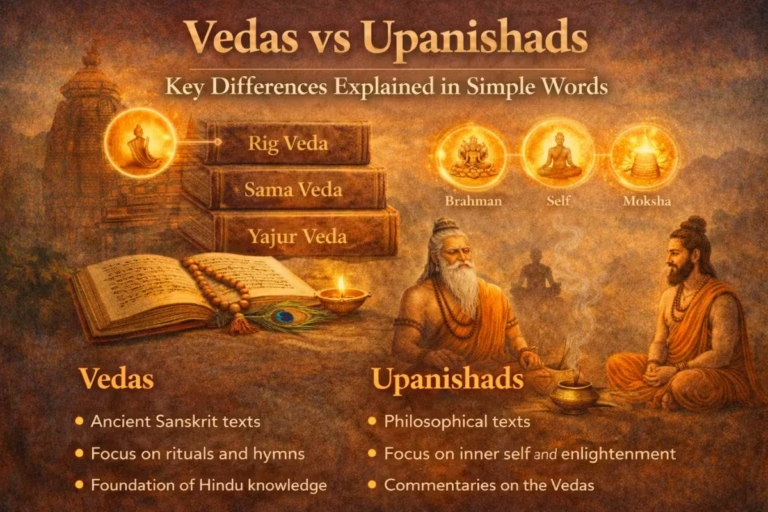
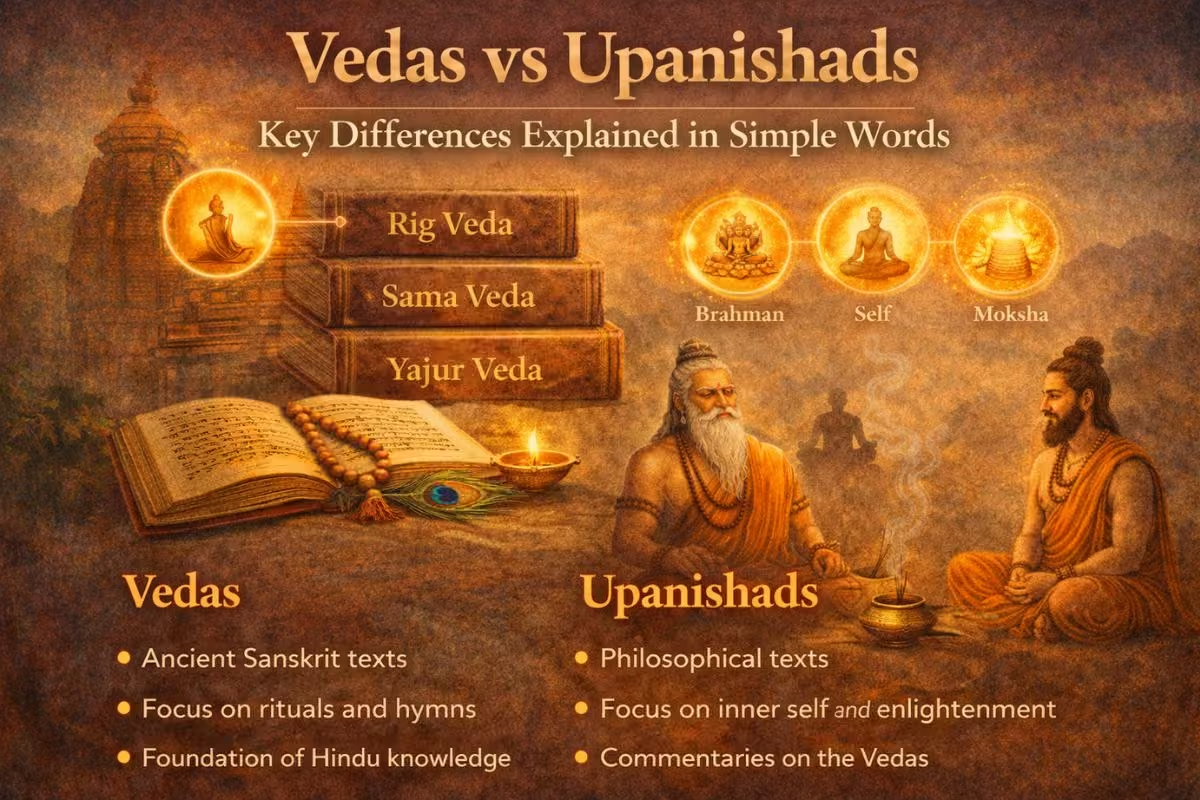
- Vedas: Action, ritual, and order
- Upanishads: Awareness, self-knowledge, and meaning
Both belong to the same tradition—but they speak to different stages of human curiosity.
Purpose: What Are They Trying to Teach?
Vedas
The Vedas guide people on:
- performing rituals
- maintaining balance with nature
- living responsibly in society
They are concerned with right action.
Upanishads
The Upanishads are more concerned with:
- understanding the self
- the nature of reality
- freedom from inner suffering
They are concerned with right understanding.
Style and Tone
This difference is easy to feel when you read them.
- Vedas sound structured, formal, and rhythmic—often meant to be recited aloud
- Upanishads feel conversational, reflective, sometimes even poetic
The Vedas instruct.
The Upanishads explore.
Ritual vs Reflection
One of the biggest shifts is how they view rituals.
- The Vedas place great importance on rituals and ceremonies
- The Upanishads ask whether rituals alone can bring lasting peace
The Upanishads don’t reject rituals—but they gently suggest that inner awareness matters more than outer performance.
View of the Self
This is where the difference becomes profound.
- In the Vedas, the focus is on duties, roles, and actions
- In the Upanishads, the focus is on the inner self (Atman)
The Upanishads ask:
What remains when everything else—status, name, possessions—falls away?
That question changes the direction of the conversation entirely.
Simple Comparison Table of Vedas and Upnishad Defference
| Aspect | Vedas | Upanishads |
| Main focus | Rituals and duties | Self-knowledge |
| Direction | Outward (world, action) | Inward (mind, awareness) |
| Tone | Instructional | Reflective |
| Goal | Harmony and order | Inner freedom |
| Approach | Doing | Understanding |
Do You Need One Without the Other?
Not really.
Traditionally, the Vedas and Upanishads are seen as steps, not rivals.
You begin with action—learning how to live responsibly.
Then you naturally start asking deeper questions—about meaning and identity.
The Upanishads don’t cancel the Vedas.
They complete the journey the Vedas begin.
Why This Difference Still Matters Today
Modern life is full of action—work, goals, pressure, routines. In that sense, we’re all living in a “Vedic” mode.
But when people feel restless or empty despite doing everything right, the Upanishadic questions arise naturally:
- Is this all there is?
- Why don’t achievements bring lasting peace?
- Who am I beyond success and failure?
That’s why both texts are still read—and still needed.
A Simple Way to Remember
If you ever feel confused, remember this:
- The Vedas teach you how to live well in the world
- The Upanishads help you understand yourself beyond the world
One prepares you for life.
The other helps you understand it.
And together, they form one of the most thoughtful conversations humanity has ever had.
What Is Atman? The Upanishads’ Idea of the True Self Explained
Almost everyone, at some point, pauses and wonders:
Who am I—beyond my name, work, and daily worries?
The Upanishads don’t rush to answer this. They sit with the question. And slowly, they point to a quiet idea at the heart of Indian philosophy: Atman.
Not a belief to accept. Not a rule to follow.
Just something to notice.
Atman Meaning (Without Complicated Words)
In the most basic sense, Atman means your true self.
Not your body.
Not your thoughts.
Not the version of you the world sees.
Atman is described as the awareness that knows you are thinking, feeling, and living.
You don’t see it—but you experience everything through it.
Why the Upanishads Talk About Atman So Much
The thinkers behind the Upanishads were careful observers of life.
They noticed:
- The body changes with time
- Thoughts never stay the same
- Emotions come and go
Yet something remains steady—the one who notices all this happening.
That steady presence is what they called Atman.
They weren’t trying to create a theory. They were simply naming a human experience most people overlook.
Atman Is Not Your Personality
This part matters.
Atman is not:
- your personality
- your achievements
- your failures
- your social identity
Those things change. Atman doesn’t.
The Upanishads gently suggest that much of human suffering comes from confusing these temporary layers with who we really are.
A Very Simple Way to Understand It
Think about this:
You know you’re tired.
You know when you’re happy.
You know when your mind is restless.
Whatever knows these experiences—that is closer to Atman.
You don’t need to imagine it. You don’t need to create it.
It’s already there, quietly observing.
Atman and Brahman: The Big Insight
One of the most famous ideas in the Upanishads is this:
Atman (your inner self) is the same as Brahman (the deepest reality of existence).
This doesn’t mean you as a person are special or superior.
It means the same consciousness that looks out through your eyes exists everywhere—in different forms, names, and lives.
It’s a radical idea, but also a strangely comforting one.
How the Upanishads Explain Atman
Not through commandments.
Not through threats or promises.
They use:
- conversations between teachers and students
- stories and metaphors
- silence and reflection
Often, the teacher doesn’t give a direct answer at all. Instead, the student is guided to see for themselves.
Because Atman, they say, isn’t learned—it’s recognized.
Why This Idea Still Feels Relevant Today
Modern life is loud, fast, and full of comparison. Many people feel lost even when everything looks “fine” on the outside.
The idea of Atman quietly reminds us:
- you are more than your productivity
- peace doesn’t come from constant control
- your worth isn’t something you earn
This is why ideas from the Upanishads show up today in meditation, mindfulness, and self-inquiry—even outside India.
Common Questions Beginners Ask
Is Atman the same as the soul?
It’s similar, but broader. Atman isn’t a personal soul—it’s the timeless self beyond identity.
Do I need to follow a religion to understand Atman?
No. The Upanishads explore human awareness, not religious obedience.
Can Atman be experienced directly?
The texts suggest it’s recognized through stillness, attention, and honest self-reflection.
A Quiet Ending
The Upanishads don’t say, “Become something else.”
They say, “Look carefully at what you already are.”
Atman isn’t hidden because it’s far away.
It’s hidden because it’s too close—always present, quietly watching.
And sometimes, simply noticing that changes how life feels.
About The Author