What Are the Upanishads_ The Philosophy Hidden Inside the Vedas
If the Vedas feel vast and outward—full of fire rituals, hymns to the sky, and careful action—the Upanishads feel like a quiet turn inward.
People often discover the Upanishads when they’re no longer asking how to perform a ritual, but why life feels the way it does. Questions about identity, fear, purpose, and peace naturally lead here. And that’s exactly where the Upanishads begin.
First, What Does “Upanishad” Even Mean?
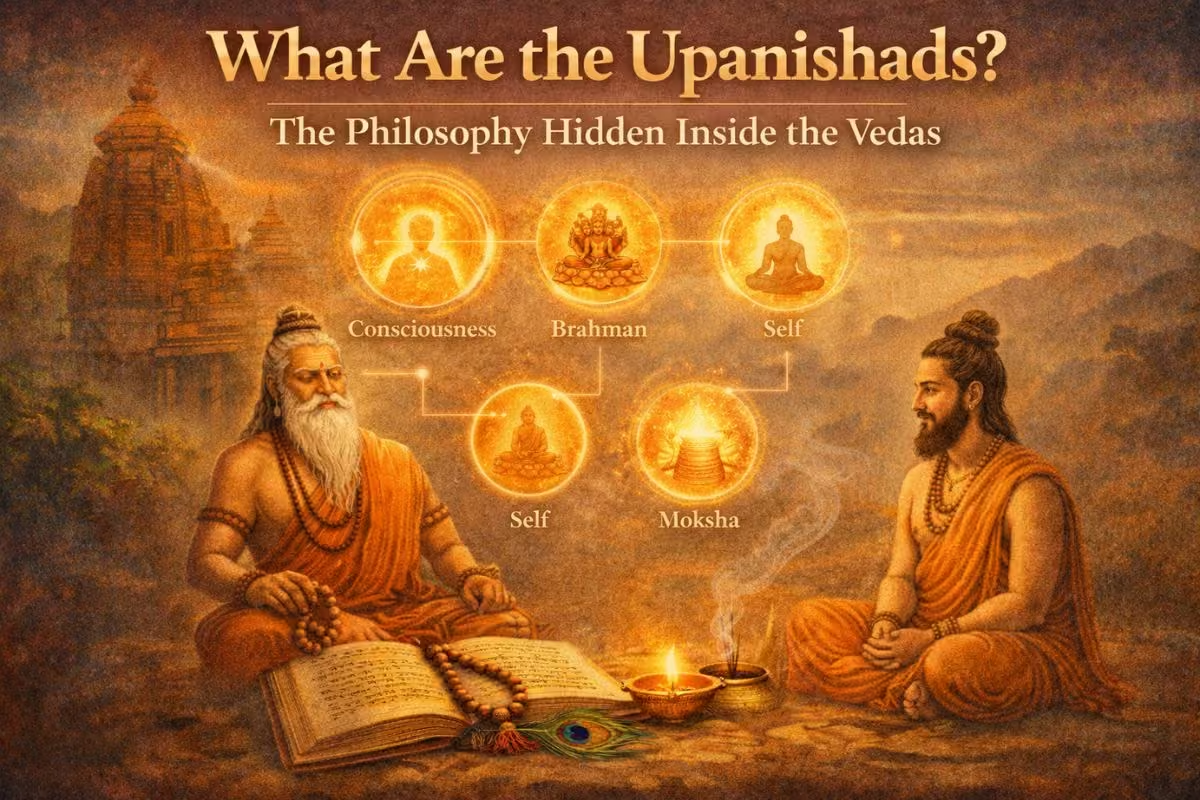
The word Upanishad comes from a phrase that roughly means “sitting down near.”
Not in a classroom sense—but in a human one.
It suggests a student sitting close to a teacher, listening carefully. No lectures. No commands. Just quiet conversation and reflection. Knowledge is shared gently, not imposed.
That spirit defines the Upanishads.
Where Do the Upanishads Come From?
The Upanishads are not separate from the Vedas. They are the reflective, philosophical portions found at the end of the Vedic tradition.
Over time, thinkers began to ask deeper questions:
- Why perform rituals at all?
- Who is the one performing them?
- What is the self beneath roles, names, and actions?
The Upanishads emerged from this shift—from outward action to inner understanding.
What Are the Upanishads About?
At their core, the Upanishads explore a few timeless ideas.
The Self (Atman)
One of their central questions is: Who am I, really?
Not your job, body, or personality—but the awareness behind it all.
The Upanishads call this deeper self Atman.
Ultimate Reality (Brahman)
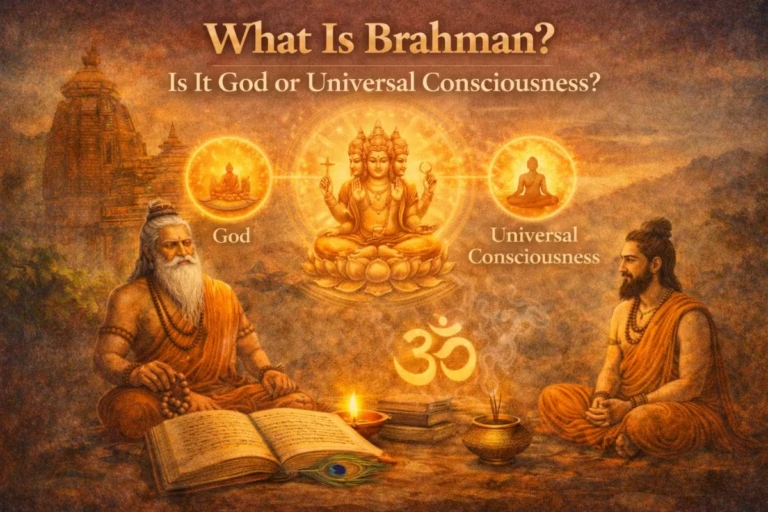
They also speak of Brahman—not a god with a form, but the underlying reality of everything that exists.
The bold idea?
Atman and Brahman are ultimately the same.
In simple terms: the deepest part of you is connected to the deepest truth of the universe.
How the Upanishads Are Different from the Vedas
This difference is important, especially for beginners.
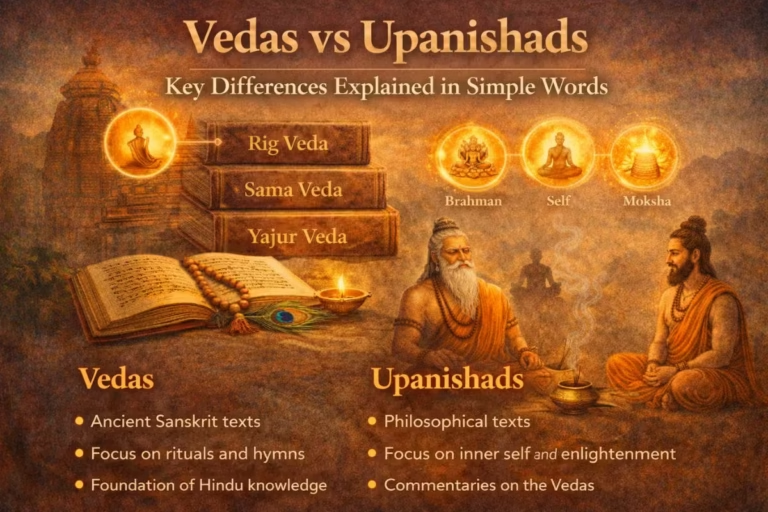
- The Vedas focus on rituals, hymns, and cosmic order
- The Upanishads focus on awareness, consciousness, and inner freedom
The Vedas ask, How should we live in harmony with the world?
The Upanishads ask, Who is the one living this life?
Neither cancels the other. One leads naturally into the next.
No Rules, No Threats—Just Questions
One reason modern readers connect with the Upanishads is their tone.
They don’t threaten punishment.
They don’t demand belief.
They don’t rush to conclusions.
Instead, they ask questions like:
- What remains when everything changes?
- Can lasting peace come from external things?
- Is freedom something we gain—or something we recognize?
The answers are not handed over. They are discovered.
Why the Upanishads Still Matter Today
Even though they are ancient, the Upanishads feel strangely modern.
In a time of anxiety, distraction, and constant comparison, they gently point inward. They suggest that peace isn’t found by adding more to life—but by understanding what’s already there.
Ideas found today in mindfulness, meditation, and self-inquiry echo thoughts first explored in the Upanishads centuries ago.
Common Questions People Ask
Are the Upanishads religious texts?
They are spiritual and philosophical, but not rigidly religious. Many people read them without following any religion.
How many Upanishads are there?
There are over 100 known Upanishads, but about a dozen are considered principal and most widely studied.
Do I need to read the Vedas first?
Not necessarily. Many beginners start directly with simplified Upanishad explanations.
Are the Upanishads difficult to understand?
Some passages are deep, but many ideas are expressed through stories, metaphors, and dialogue.
A Quiet Way to End
The Upanishads don’t try to impress. They don’t explain everything. And they don’t promise quick transformation.
What they offer instead is something rare:
space to think, question, and notice.
They are called the philosophy hidden inside the Vedas not because they are secret—but because they wait patiently for readers who are ready to look inward.
And when someone is, the conversation begins.
About The Author