Screenshot
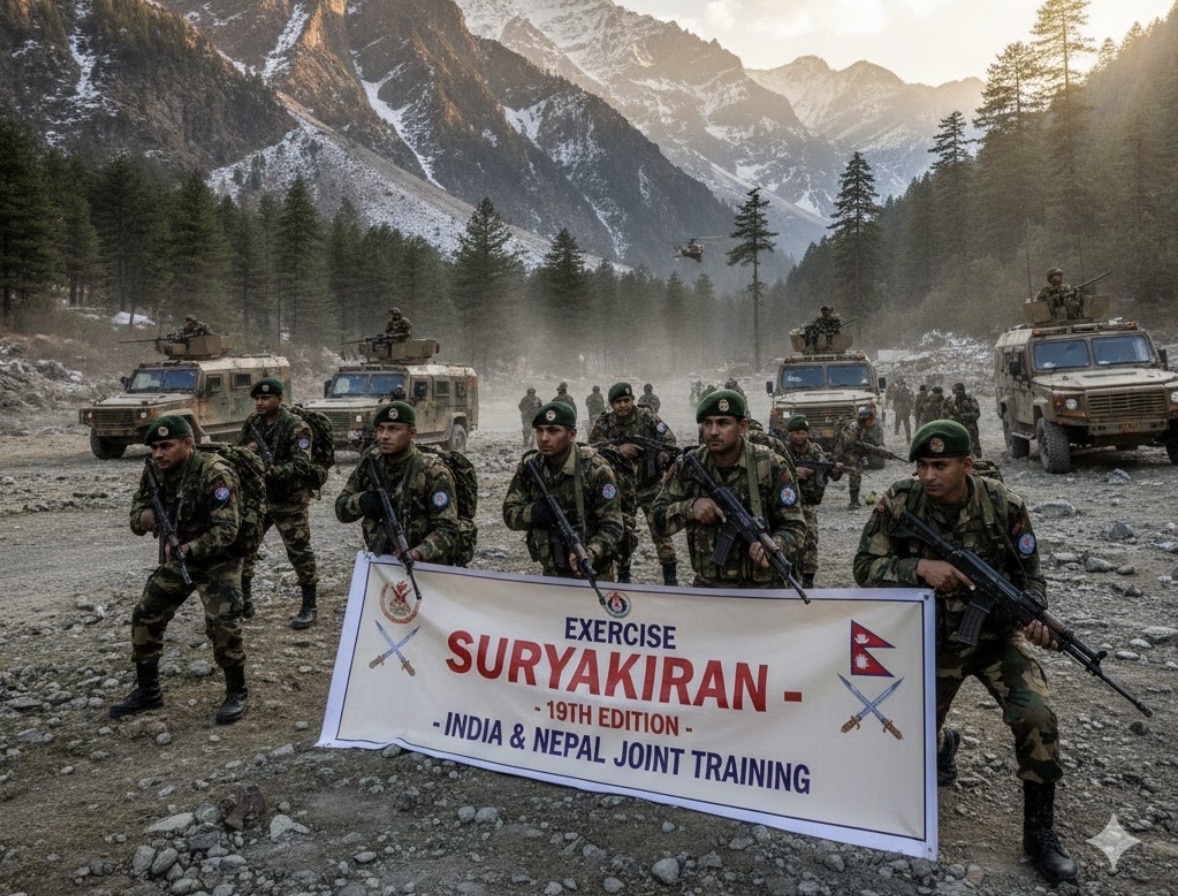
The Indian Army and Nepal Army conducted the high-intensity Surya Kiran-19 joint military exercise, marking another major step in strengthening defence cooperation between the two neighbouring countries. The exercise focused on counter-terrorism operations, close-quarter combat, jungle warfare, and disaster response training, aimed at improving real-time coordination between the two forces.
This bilateral exercise is part of a long-standing tradition of military collaboration between India and Nepal. With evolving regional security challenges, both armies used this platform to share tactical expertise, enhance battlefield communication, and develop faster joint response strategies.
What is SURYAKIRAN-19?
SURYAKIRAN is a bilateral annual military exercise that takes place alternately in India and Nepal. The 19th edition brought together specially trained troops from both armies who carried out realistic combat simulations, command post exercises, and live tactical drills.
The main objective of the exercise is to build interoperability, promote mutual trust, and prepare troops for real-world counter-terror and disaster relief scenarios.
Key Highlights of the Nepal- India Joint Exercise
Several advanced and realistic training activities were conducted during SURYAKIRAN-19:
- Joint counter-terror operations simulations
- Urban warfare and room intervention drills
- Jungle warfare tactics and survival training
- Joint command planning and real-time decision-making
- Disaster response and humanitarian assistance practice
These activities allowed both armies to understand each other’s operational procedures and improve coordination during complex missions.
Why This Joint Exercise Is Important
The India–Nepal military partnership plays a crucial role in maintaining regional stability. Exercises like SURYAKIRAN -19 help both nations prepare for shared security threats such as terrorism, natural disasters, and border challenges.
By training together, the Indian Army and Nepal Army improve their ability to act quickly and efficiently during emergencies, ensuring better safety and security for the region.
Growing Defence Ties Between India and Nepal
India and Nepal share strong cultural, historical, and strategic ties. Over the years, their armed forces have worked closely through joint drills, training programmes, and officer exchanges. SURYAKIRAN -19 continues this legacy by enhancing trust and operational readiness between both sides.
Conclusion
Surya Kiran-19 stands as a powerful symbol of the growing defence partnership between India and Nepal. Through this joint counter-terror exercise, both armies demonstrated their commitment to peace, security, and regional stability, while sharpening their combat readiness for future challenges.
About The Author