How to Find Your Mulank Number Using Your Date of Birth
Numerology has become increasingly popular among people looking to understand their personality, career path, relationships, and life patterns through numbers. One of the most important concepts in numerology is the Mulank number, also known as the Birth Number.
Your Mulank is calculated using your date of birth and is believed to reveal important insights about your nature, strengths, weaknesses, behavior, and decision-making style. Many numerology experts also connect Mulank numbers with career choices, love compatibility, lucky numbers, and personal growth.
The best part is that finding your Mulank number is simple and does not require advanced calculations. In this detailed guide, you will learn how to calculate your Mulank number, understand the meaning of numbers 1 to 9, and explore what each number says about your personality and life journey.
What Is Mulank Number in Numerology?
In numerology, a Mulank number is considered one of the most important numbers connected to a person’s personality, thinking style, strengths, weaknesses, and life path. The word “Mulank” comes from Hindi numerology practices and is commonly known as the Birth Number.
Your Mulank is calculated using the day you were born. It always falls between 1 and 9.
For example:
- If your birth date is 5, your Mulank is 5.
- If your birth date is 18, then 1 + 8 = 9.
- If your birth date is 29, then 2 + 9 = 11 and 1 + 1 = 2.
Many people use Mulank numerology to understand personality traits, career choices, love compatibility, lucky numbers, and habits.
How to Calculate Your Mulank Number
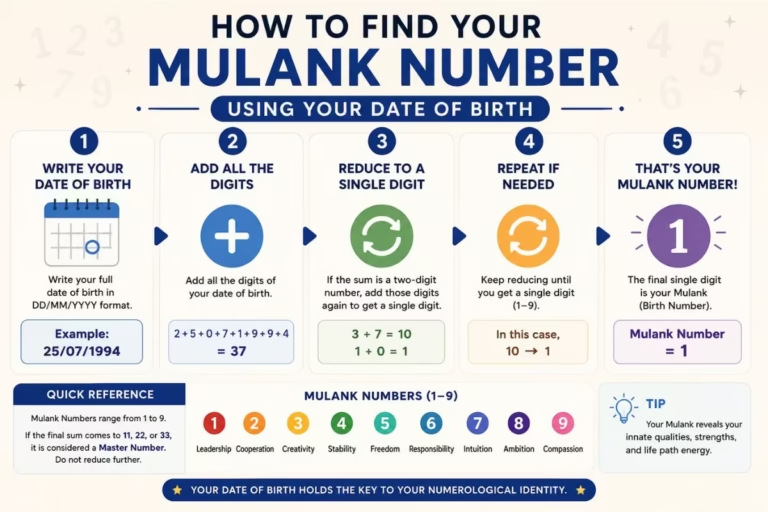
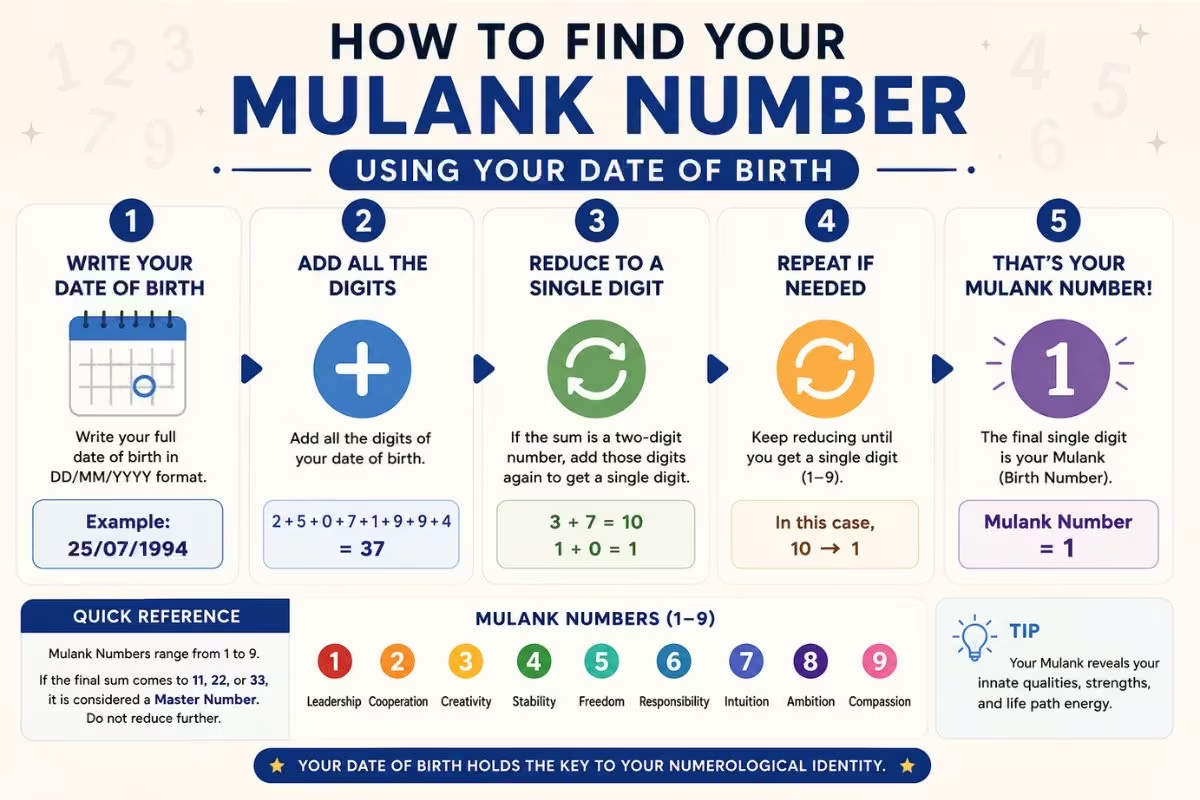
Calculating your Mulank number is simple. You only need your birth date, not the full date of birth.
Step-by-Step Method
Step 1: Write Your Birth Date
Take only the day from your date of birth.
Example:
- 4 June 1998 → Take 4
- 15 August 2001 → Take 15
- 28 January 1995 → Take 28
Step 2: Add Digits Until You Get a Single Number
If your birth date is a two-digit number, add the digits together.
Examples:
- 15 → 1 + 5 = 6
- 28 → 2 + 8 = 10 → 1 + 0 = 1
- 29 → 2 + 9 = 11 → 1 + 1 = 2
Your final single digit between 1 and 9 is your Mulank number.
Mulank Number Chart
| Birth Date | Mulank Number |
|---|---|
| 1, 10, 19, 28 | 1 |
| 2, 11, 20, 29 | 2 |
| 3, 12, 21, 30 | 3 |
| 4, 13, 22, 31 | 4 |
| 5, 14, 23 | 5 |
| 6, 15, 24 | 6 |
| 7, 16, 25 | 7 |
| 8, 17, 26 | 8 |
| 9, 18, 27 | 9 |
Meaning of Each Mulank Number
| Mulank | Meaning | Key Personality Traits | Best Career Fields | Common Challenges |
| 1 | Leadership and independence | Confident, ambitious, creative | Business, management, politics | Ego, impatience |
| 2 | Emotions and harmony | Caring, diplomatic, sensitive | Counseling, writing, teaching | Overthinking, mood swings |
| 3 | Growth and discipline | Intelligent, social, optimistic | Education, finance, administration | Perfectionism, stubbornness |
| 4 | Stability and hard work | Practical, logical, disciplined | Engineering, technology, research | Emotional distance |
| 5 | Communication and freedom | Adaptable, energetic, curious | Marketing, media, travel | Restlessness, inconsistency |
| 6 | Love and responsibility | Caring, artistic, family-oriented | Fashion, hospitality, entertainment | Emotional dependency |
| 7 | Spirituality and analysis | Intuitive, thoughtful, analytical | Research, psychology, writing | Isolation, overthinking |
| 8 | Karma and discipline | Responsible, determined, practical | Law, finance, administration | Delayed success, stress |
| 9 | Courage and compassion | Brave, passionate, energetic | Sports, defense, social work | Anger, impulsiveness |
Difference Between Mulank and Bhagyank
Many people confuse Mulank and Bhagyank numbers.
Mulank
- Based only on your birth date
- Reflects personality and natural behavior
Bhagyank
- Calculated using full date of birth
- Connected to life path and destiny
Example: Date of Birth: 22 June 1994
Mulank
2 + 2 = 4
Bhagyank
2 + 2 + 0 + 6 + 1 + 9 + 9 + 4 = 33 3 + 3 = 6
So:
- Mulank = 4
- Bhagyank = 6
Lucky Numbers According to Mulank
| Mulank | Lucky Numbers |
| 1 | 1, 3, 5 |
| 2 | 2, 6, 7 |
| 3 | 3, 6, 9 |
| 4 | 1, 4, 8 |
| 5 | 5, 6, 9 |
| 6 | 3, 6, 9 |
| 7 | 2, 7, 9 |
| 8 | 1, 4, 8 |
| 9 | 3, 6, 9 |
Can Numerology Predict Your Future?
Numerology is considered a spiritual and belief-based practice. Many people use it for self-reflection, motivation, and understanding personality patterns. However, numerology should not replace professional advice related to health, finance, career, or relationships.
Experts in astrology and numerology often suggest using Mulank readings as a guidance tool rather than a guaranteed prediction system.
Common Mistakes While Calculating Mulank Number
Using Full Date of Birth
Mulank uses only the birth date, not month and year.
Stopping at Double Digits
Always reduce numbers to a single digit.
Wrong: 29 = 11
Correct: 29 = 2 + 9 = 11 → 1 + 1 = 2
Confusing Mulank with Bhagyank
Both are different numerology concepts
Frequently Asked Questions (FAQs)
Is Mulank and Birth Number the Same?
Yes. In numerology, Mulank is also called the Birth Number.
Can Two People Have the Same Mulank?
Yes. People born on dates that reduce to the same digit share the same Mulank.
Which Mulank Is Most Powerful?
There is no universally strongest Mulank. Every number has unique strengths and challenges.
Does Mulank Affect Career and Relationships?
Numerology experts believe Mulank can influence personality traits that may impact career choices and relationships.
Can Mulank Change?
No. Your Mulank is based on your birth date and remains the same throughout life.
Final Thoughts
Mulank numerology is a simple yet popular method used to understand personality traits, strengths, behavior patterns, and compatibility. By using your date of birth, you can easily calculate your Mulank number and explore what numerology says about your nature and life journey.
While numerology can be interesting and insightful, it should be viewed as a self-awareness tool rather than an exact science. Using it responsibly can help people reflect on their habits, goals, and personal growth.
Disclaimer: This article is for informational and entertainment purposes only. Numerology is not scientifically proven and should not be considered medical, financial, legal, or psychological advice. Readers should consult qualified professionals for important life decisions.
About The Author