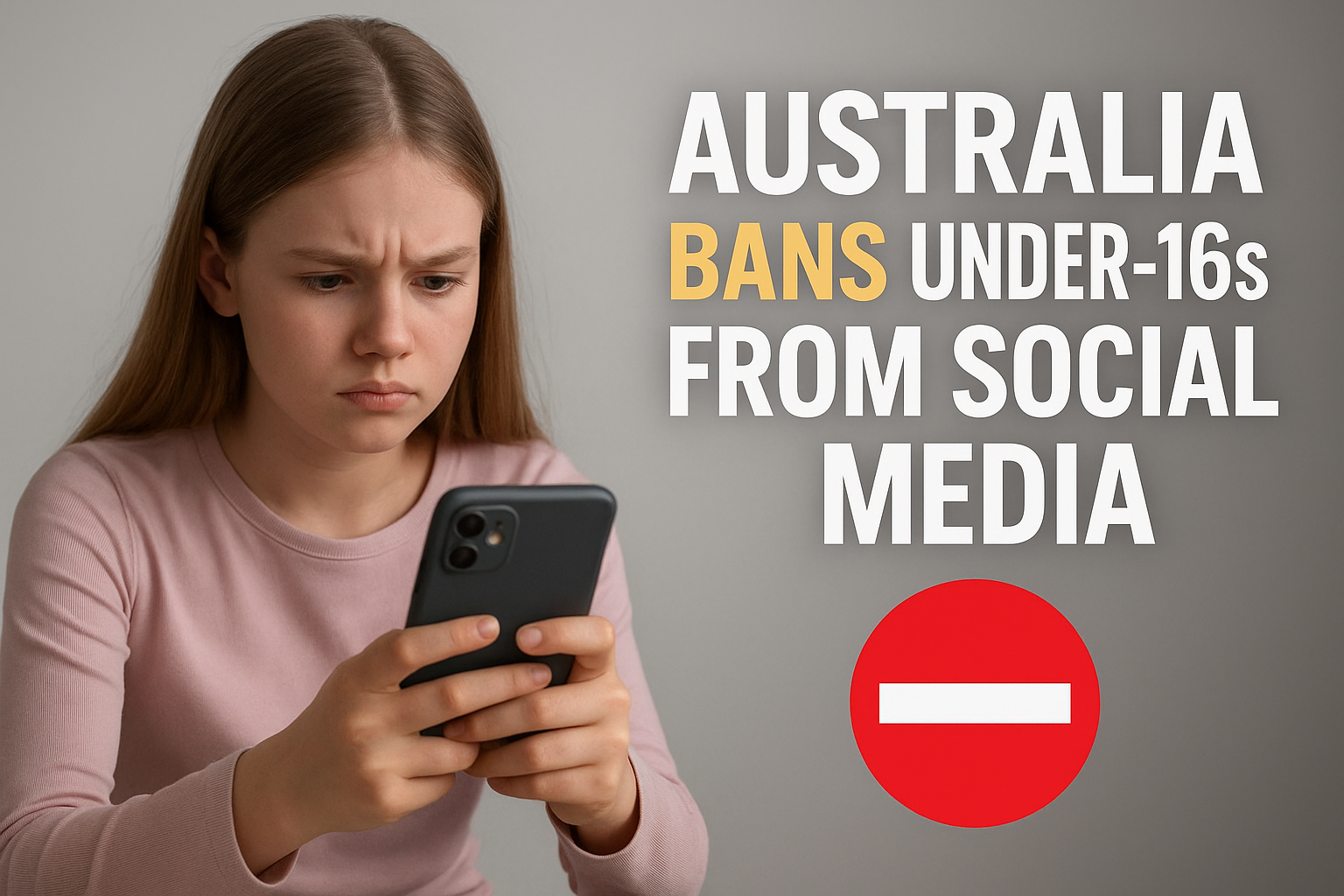
On December 9, 2025, Australia implemented a world-first law that effectively locks millions of children under 16 out of major social media platforms. The new regulation — under the Online Safety Amendment (Social Media Minimum Age) Act 2024 — requires platforms such as Instagram, Facebook, TikTok, YouTube, Snapchat, X (formerly Twitter), Reddit, and several others to block users under 16 from creating or maintaining accounts starting December 10, 2025. Those that fail to comply face fines of up to A$49.5 million.
What Has Changed Under the New Under-16 Law?
- From December 10 onward, social media companies are required to take “reasonable steps” to ensure no child under 16 has an active account. The key changes include:
- Existing under-16 accounts are being deactivated or placed in a queue for deletion.
- New registrations from users under 16 are strictly prohibited.
- Children may still view public content without logging in, but they cannot post, comment, message, or use any interactive feature.
- Teenagers aged 13–15, who previously used social media freely, are among the most affected.
The law is designed as a major overhaul in youth digital safety and marks the strictest age-based social media regulation ever introduced by any country.
Why Australia Introduced the Social Media Ban
The Australian government says the ban is aimed at improving child mental health, safety, and online wellbeing. Regulators argue that children face increasing risks online, including:
- Cyberbullying and harassment
- Exposure to harmful or violent content
- Addictive scrolling behaviors
- Low self-esteem due to comparison culture
Supporters of the move say social media requires the same type of restrictions seen in driving, drinking, or gambling—activities that demand a certain maturity level.
List of Social Media Platforms Affected by the Under-16 Ban
Under Australia’s new Online Safety Amendment law, all major social media platforms must block users under 16 from creating or maintaining accounts. The platforms affected include:
- TikTok
- YouTube
- Snapchat
- X (formerly Twitter)
- Discord
- Twitch
- Tumblr
- BeReal
- Threads
- Telegram (public channels and social features)
- Kik
- Omegle-style chat platforms (where applicable)
This list covers both mainstream and emerging social platforms that allow user interaction, messaging, or content sharing—each required to enforce age verification and remove under-16 accounts.
Will the Ban Actually Work? Key Challenges and Concerns
While the policy is ambitious, experts remain divided over whether it will be effective:
1.Difficulty in Age Verification
A government trial suggested there were no major technological hurdles to age verification, but critics say mass implementation could:
- Compromise user privacy
- Be easy to bypass
- Be difficult for platforms to maintain at scale
2. Migration to Unregulated Apps
- Children may turn to:
- VPNs
- Lesser-known platforms
- Unregulated foreign apps
- These can be more unsafe than mainstream platforms.
3. Mental Health and Social Isolation
- Many teens rely on social media for:
- Staying in touch with friends
- Participating in school groups
- Joining creative or hobby communities
- Educators warn the ban may unintentionally isolate students, especially those in boarding schools or living away from family.
4. Free Speech and Rights Issues
- Civil liberties groups say the ban:
- Limits minors’ freedom of expression
- Restricts access to knowledge
- Reduces participation in public conversations
- Legal challenges have already been filed, questioning whether the law infringes on digital rights.
- Mixed Reactions Across Australia
The response to the ban has been divided:
Supporters Say:
- It will reduce online harms.
- It gives parents more control.
- It sets a new global standard for child online protection.
Critics Say:
- The ban is too extreme.
- It may push teens toward unsafe online spaces.
- It could normalize intrusive ID checks and biometric age verification.
What’s Next? What Observers Are Watching
The rollout will be closely monitored in the coming months. Key developments include:
- Monthly reports from platforms on the number of under-16 accounts removed.
- Data on whether the ban reduces cyberbullying, addiction, or harmful content exposure.
- Monitoring whether teens shift to unsafe alternatives.
- International reactions — several European countries are already considering similar laws.
Legal debates around privacy, digital rights, and enforcement are expected to intensify if platforms struggle to meet compliance standards.
Conclusion
Australia’s decision to block under-16s from social media marks a historic and controversial moment in global internet regulation. It may become a template for other nations or serve as a warning about the risks of aggressive online restrictions. The coming months will determine whether this bold experiment improves child safety—or simply reshapes how young people navigate the digital world.
About The Author