Winter Solstice 2025 When Is the Darkest Day of the Year Everything You Need to Know
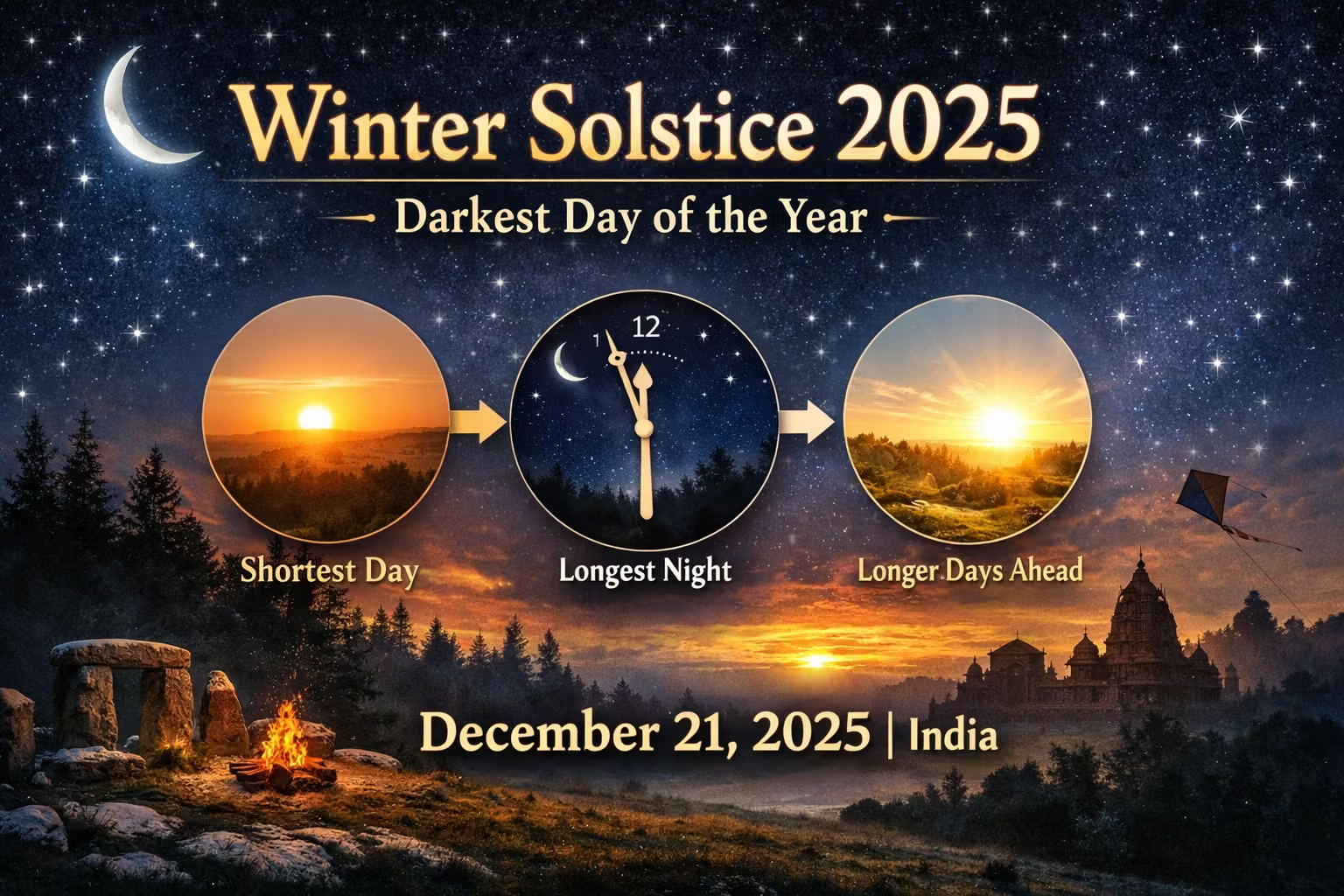
New Delhi: The Winter Solstice 2025 marks the shortest day and longest night of the year in the Northern Hemisphere. This astronomical event holds scientific, cultural, and spiritual significance across the world, including in India, where it signals the gradual return of longer daylight hours.
In 2025, the Winter Solstice occurs in late December, bringing the year’s darkest day and officially marking the start of astronomical winter.
When Is the Winter Solstice in 2025?
- Date: Sunday, December 21, 2025
- Time (India): Evening hours (IST)
- Hemisphere: Northern Hemisphere (including India)
On this day, the Sun reaches its southernmost position in the sky, directly overhead at the Tropic of Capricorn.
Why Is It Called the Darkest Day of the Year?
The Winter Solstice is often referred to as the darkest day of the year because it has:
- The fewest daylight hours
- The longest night
This happens because Earth’s axis is tilted about 23.5 degrees, and during the winter solstice, the Northern Hemisphere tilts furthest away from the Sun.
Daylight Duration in India (Approximate)
- Northern India: Around 10–10.5 hours of daylight
- Southern India: Slightly longer daylight due to proximity to the equator
The Science Behind the Winter Solstice
- The Winter Solstice is a result of Earth’s orbit around the Sun combined with its axial tilt.
- The Sun appears lowest in the sky at noon
- Shadows are longest
- After this day, daylight hours increase gradually
This shift marks the beginning of the Sun’s northward journey, also known as Uttarayan in Indian tradition.
What Happens After the Winter Solstice?
From December 22 onward, days slowly start getting longer, even though temperatures may continue to drop for a few weeks due to seasonal lag.
Key changes after the solstice:
- Gradual increase in daylight
- Sun rises slightly earlier each day
- Psychological impact improves due to more sunlight
Winter Solstice and Indian Traditions
In India, the Winter Solstice is closely linked to astronomical and spiritual beliefs.
- Uttarayan Connection
- The solstice signals the approach of Uttarayan, when the Sun begins its northward movement
- Uttarayan is considered auspicious in Hindu philosophy
- Cultural Observances
- Preparations for festivals like Makar Sankranti begin after the solstice
- Agricultural communities view it as a turning point in the seasonal cycle
How Different Is the Winter Solstice Around the World?
- Northern Hemisphere: Shortest day, longest night
- Southern Hemisphere: Longest day, shortest night (Summer Solstice)
- Arctic Circle: Polar night (24 hours of darkness)
- Antarctic Circle: 24 hours of daylight
Health and Mood Impact
- Reduced sunlight during winter can affect physical and mental well-being.
- Common effects include:
- Low energy levels
- Mood changes or seasonal blues
- Vitamin D deficiency
Expert Tips
- Get sunlight during midday hours
- Maintain a regular sleep schedule
- Include vitamin D–rich foods in your diet
Frequently Asked Questions
Is December 21 always the Winter Solstice?
Mostly yes, but it can also fall on December 22, depending on the year and leap-year cycle.
Is Winter Solstice the coldest day of the year?
No. The coldest days usually occur in January, due to delayed atmospheric cooling.
Does India experience extreme darkness?
No. India does not experience polar nights, but northern regions do see noticeably shorter days.
About The Author