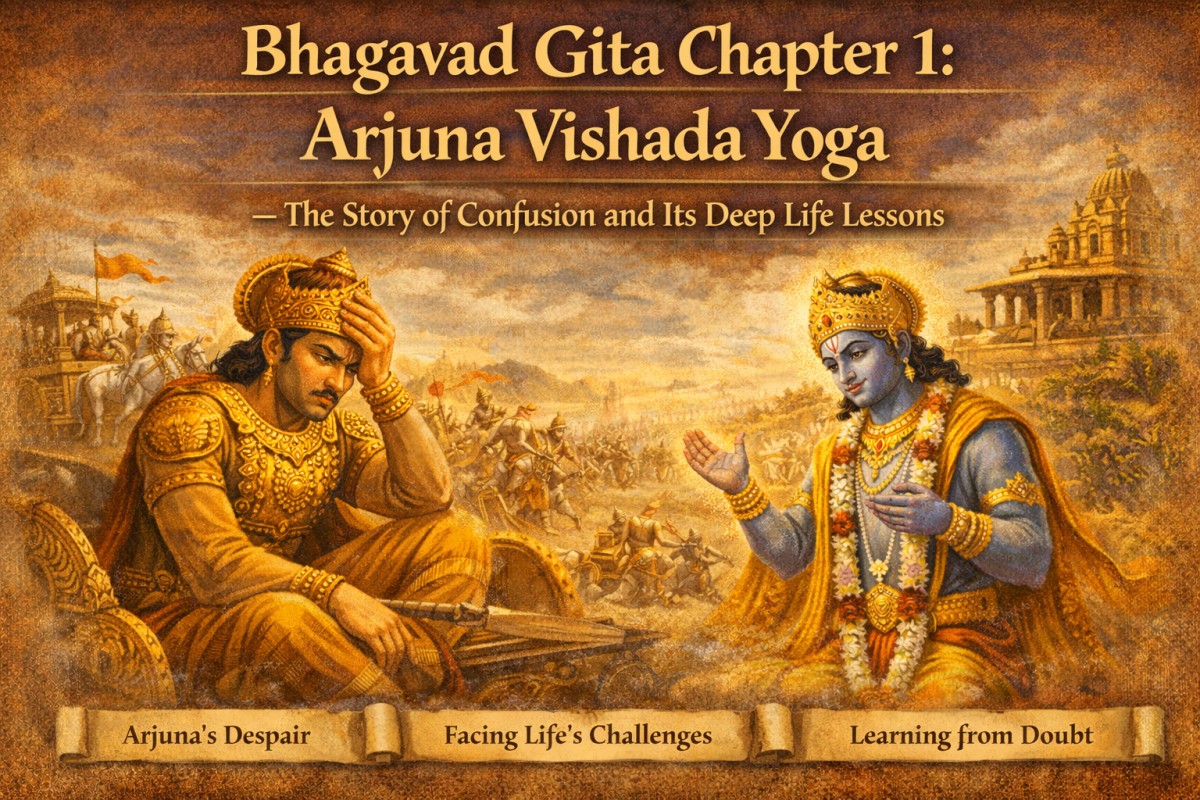
The Bhagavad Gita Chapter 1 Source- AI
The first chapter of the Bhagavad Gita, known as “Arjuna Vishada Yoga,” is a powerful and emotional beginning to the entire spiritual journey described in the scripture. This chapter is set on the battlefield of Kurukshetra, where the stage is set for a great war between the Pandavas and the Kauravas. The central figure in this chapter is Arjuna, the mighty warrior and prince, who finds himself in a deep state of despair and confusion as he faces the prospect of fighting against his own family and friends.
The Battlefield of Kurukshetra
The chapter opens with Dhritarashtra, the blind king and father of the Kauravas, asking his charioteer, Sanjaya, about the events unfolding on the battlefield. Sanjaya describes the scene in detail, mentioning the warriors on both sides, the sounds of conchs and drums, and the array of mighty archers and heroes ready for battle. The conchs of both armies are blown, creating a thunderous sound that echoes through the battlefield.
Arjuna’s Dilemma
Arjuna, seated in his chariot with Lord Krishna as his charioteer, surveys the battlefield and sees not just enemies, but his own relatives, teachers, and friends on the opposing side. Overwhelmed by emotions, Arjuna is filled with grief and confusion. He questions the purpose of the war, the value of victory, and the consequences of killing his loved ones. Arjuna feels sorrow, guilt, and despair, and decides to lay down his bow and arrows, refusing to participate in the battle.
The Despondency of Arjuna
Arjuna’s emotional breakdown is a universal experience. He is torn between his duty as a warrior and his moral values. He wonders if winning the war is worth the price of bloodshed and suffering. This moment marks a deep emotional crisis, where Arjuna is not just facing an external battle, but an internal one as well. He is struggling with questions about dharma (righteousness), karma (action), and the consequences of his choices.
Seeking Guidance from Krishna
Unable to resolve his inner conflict, Arjuna surrenders to Krishna and asks for guidance. He tells Krishna that he is confused and seeks wisdom to understand his duty. This act of surrender is significant, as it shows that even the strongest and most capable individuals can feel weak and uncertain. Arjuna’s willingness to seek guidance from a wise mentor is the first step toward clarity and strength.
The Main Message of Chapter 1
The first chapter of the Bhagavad Gita teaches us to recognize our inner conflicts and to seek wisdom when we feel lost. It is a powerful reminder that everyone faces moments of doubt and emotional struggle. The chapter emphasizes the importance of surrendering to higher wisdom and seeking guidance from a mentor or teacher.
Practical Lessons for Modern Life
Arjuna’s dilemma is not just a story from ancient times; it is relevant to our lives today. We all face situations where we are torn between duty and morality, where we must make difficult choices, and where we feel overwhelmed by emotions. The lesson here is to acknowledge our feelings, to seek guidance, and to trust in the wisdom of those who have walked the path before us.
The Role of Krishna as a Guide
Krishna’s role in this chapter is that of a compassionate guide and mentor. He listens to Arjuna’s concerns and prepares to offer wisdom that will help him navigate his inner turmoil. Krishna’s teachings in the following chapters will address Arjuna’s questions and provide practical solutions for dealing with life’s challenges.
Conclusion
The first chapter of the Bhagavad Gita is a powerful introduction to the spiritual journey that lies ahead. It teaches us to recognize our inner conflicts, to seek guidance, and to trust in the wisdom of those who have walked the path before us. Arjuna’s story is a reminder that even the strongest can feel weak, and that surrendering to higher wisdom can lead to peace and clarity.
By understanding Arjuna’s dilemma, we can learn to face our own challenges with courage and wisdom. The Bhagavad Gita’s teachings are not just for warriors, but for anyone seeking clarity, peace, and purpose in life.
Disclaimer:
This content is for general informational purposes about spiritual teachings in India and worldwide. It is not professional or personal advice. For guidance, consult authentic sources or qualified spiritual teachers.
About The Author