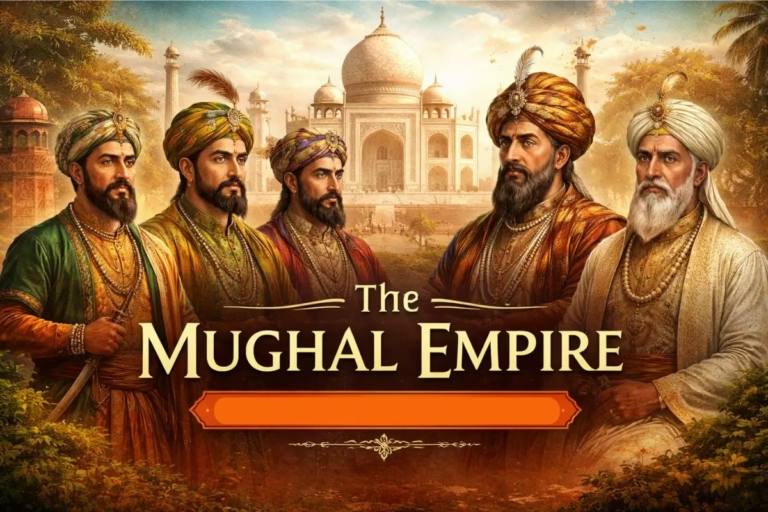
The Mughal Empire ruled a large part of India for more than 300 years. While some Mughal emperors like Akbar are remembered for tolerance and good governance, others are often described as cruel or harsh rulers due to their strict policies, wars, and punishments.
This article explains which Mughal emperors are considered cruel, why they are called so, and the historical context behind their actions—in simple, easy-to-understand language.
Who Were Called Cruel Mughal Emperors?
Cruelty in history is usually linked to:
- Severe punishments
- Religious intolerance
- Heavy taxation
- Continuous wars and violence
Based on historical records, the names below are most often mentioned.
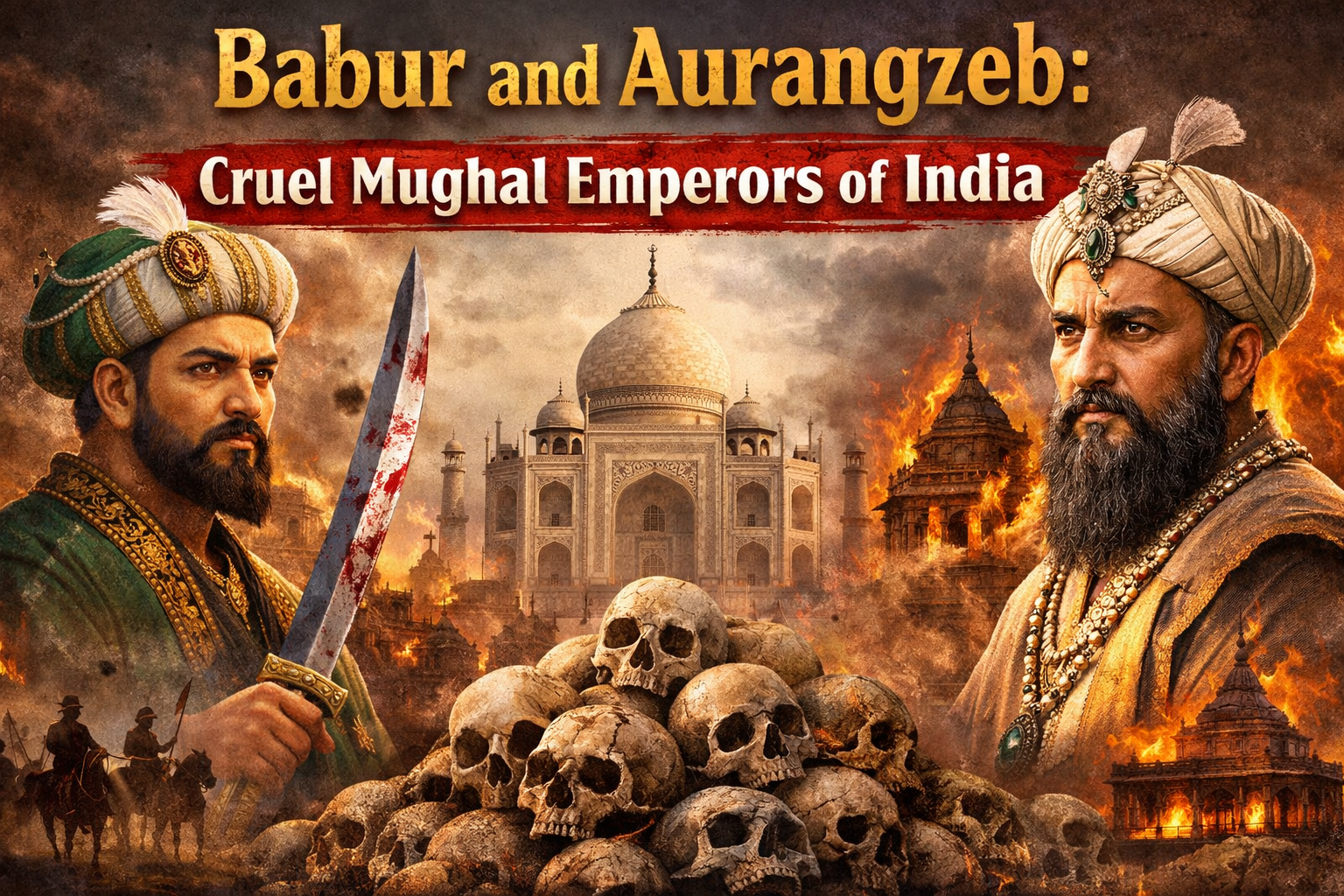
1. Aurangzeb (1658–1707) – The Most Controversial Mughal Emperor
Aurangzeb is frequently called the most cruel Mughal emperor, mainly because of his strict religious and political policies.
Why is Aurangzeb called cruel?
- Re-imposed Jizya tax on non-Muslims
- Ordered destruction of some temples (as per many historical accounts)
- Fought long and bloody wars, especially in the Deccan
- Imprisoned his father Shah Jahan
- Executed his brothers to secure the throne
📌 Historical reality:
Aurangzeb expanded the Mughal Empire to its largest size, but his harsh policies created rebellions and weakened the empire from within.
2. Babur (1526–1530) – A Warrior King with Brutal Methods
Babur, the founder of the Mughal Empire, was a skilled military commander but followed violent war tactics common in medieval times.
Why is Babur considered harsh?
- Mass killings after battles
- Construction of “towers of skulls” to terrorize enemies
- Invasion-based rule rather than settlement initially
📌 Context:
Such brutality was normal for 16th-century warfare, and Babur himself wrote openly about it in Baburnama.
3. Jahangir (1605–1627) – Justice with Cruel Punishments
Jahangir is known for his sense of justice, but he also used extreme punishments.
Examples of cruelty:
- Public executions
- Harsh punishments for rebels
- Ordered execution of Sikh Guru Guru Arjan Dev (as per Sikh historical records)
📌 Reality:
Jahangir believed fear was necessary to maintain law and order.
4. Shah Jahan (1628–1658) – Soft Ruler, Hard Decisions
Shah Jahan is remembered for the Taj Mahal, but his rule wasn’t entirely peaceful.
Why is he sometimes criticized?
- Brutal suppression of rebellions
- Forced labor for large construction projects
- Lavish spending while people suffered during famines
📌 Reality:
Compared to Aurangzeb, Shah Jahan was less cruel but still followed strict imperial control.
Were All Mughal Emperors Cruel?
No. Akbar the Great is widely praised for:
- Religious tolerance
- Ending Jizya tax
- Respect for different cultures
Cruelty varied from ruler to ruler and depended heavily on the political situation of that time.
Final Verdict: Cruel or Contextual?
Labeling Mughal emperors as “cruel” depends on:
- Time period
- Political challenges
- Medieval norms of warfare and punishment
Among all, Aurangzeb is most often considered cruel due to documented strict policies and intolerance, while others displayed cruelty mainly during wars or rebellions.
Disclaimer:
This article is written for informational and educational purposes only. The descriptions of historical figures and events are based on commonly referenced historical records and interpretations. Historical accounts may vary across sources and perspectives. The article does not intend to offend any community, religion, or individual.
About The Author