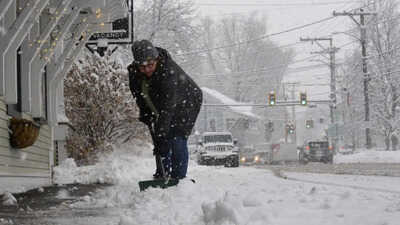
Imagine driving on a clear, chilly winter afternoon. Within seconds, your surroundings vanish behind a wall of white. The wind howls, the road turns icy, and visibility drops to almost nothing. You’ve just encountered one of winter’s most dangerous and unpredictable weather events: the snow squall.
Unlike a steady snowstorm that lingers for hours, a snow squall is sudden, intense, and often catches even the most experienced drivers off guard. Understanding them can be the difference between a safe drive and a life-threatening situation.
What Is a Snow Squall?
A snow squall is a brief but severe burst of snow accompanied by strong, gusty winds. It’s the winter equivalent of a summer thunderstorm—without the lightning, but with freezing temperatures, reduced visibility, and treacherous road conditions.
Think of it as winter’s “fast strike”: heavy snow falling rapidly, often combined with sudden wind gusts, creating near-zero visibility.
Key Characteristics of a Snow Squall
- Duration: Usually lasts less than an hour, with most squalls passing in just 15–30 minutes.
- Intensity: Snow can accumulate rapidly, sometimes an inch or more in just a few minutes.
- Wind: Gusty winds often exceed 30 mph, blowing snow across roads and creating dangerous whiteout conditions.
- Flash Freezes: Snow squalls frequently follow a cold front, causing temperatures to drop sharply and turning wet roads into black ice almost instantly.
Snow Squall Warnings: What They Mean
Because of their short duration, snow squalls don’t typically trigger a standard Winter Storm Warning. Instead, the National Weather Service (NWS) issues a Snow Squall Warning, a short-fused, localized alert similar to a tornado warning. These warnings are sent directly to your phone via Wireless Emergency Alerts (WEA).
What to Do When a Snow Squall Warning Is Issued
- Avoid Travel: Stay home or at work until the squall passes. Most last under an hour.
- Safe Driving: If already on the road, try to exit highways safely before the squall hits.
- Slow Down: If caught in a squall, reduce speed gradually, turn on headlights, and avoid sudden braking. Abrupt stops on icy roads can lead to multi-vehicle accidents.
- Increase Following Distance: Give extra space between your car and the vehicle ahead to allow for safe stopping.
Snow Squall vs. Snowstorm
| Feature | Snow Squall | Snowstorm / Blizzard |
|---|---|---|
| Duration | 15–60 minutes | Hours to days |
| Snow Accumulation | Usually 1–3 inches (rapidly) | Can be 6+ inches |
| Visibility | Near zero (whiteout) | Low to moderate |
| Predictability | Sudden; hard to forecast exact location | Usually forecasted days in advance |
Why Snow Squalls Are So Dangerous
The danger of a snow squall isn’t just the snow—it’s the speed at which it hits. On high-speed highways, the sudden shift from dry pavement to icy whiteout conditions is a leading cause of massive chain-reaction accidents. Add in black ice and near-zero visibility, and steering or braking becomes nearly impossible.
If you spot a sudden wall of white on the horizon or receive a snow squall notification on your phone, take it seriously. Even though most squalls pass quickly, the consequences of ignoring them can be life-changing.
Final Thoughts
Snow squalls may be brief, but their impact can be enormous. By understanding their characteristics, staying updated with warnings, and practicing safe driving strategies, you can navigate winter roads more safely.
About The Author