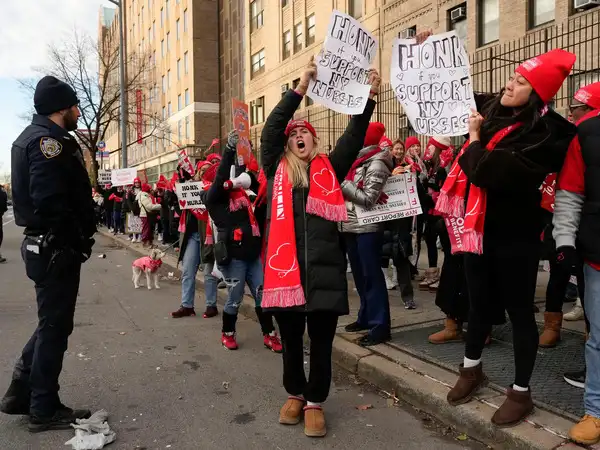
New York City entered an unprecedented healthcare crisis on Monday as nearly 15,000 nurses walked off the job at five major private hospitals. The strike is the largest nurses’ walkout in NYC history, coming at the peak of a severe flu season and putting immense pressure on the city’s healthcare system.
Governor Kathy Hochul has declared a state of emergency for Manhattan, the Bronx, and Nassau County to address the resulting staffing shortages, while Mayor Zohran Mamdani visited picket lines to show solidarity with healthcare workers.
Which Hospitals Are Affected by NYC Nurse Strike?
The strike is concentrated in the city’s wealthiest private, non-profit medical systems. Many “safety-net” and suburban hospitals, like Northwell Health, avoided walkouts by reaching deals last week. The hospitals currently under strike include:
- The Mount Sinai Hospital (Main campus, Madison Ave)
- Mount Sinai Morningside
- Mount Sinai West
- Montefiore Medical Center (Einstein, Moses, Hutchinson campuses)
- NewYork-Presbyterian (Columbia University Irving Medical Center and satellite campuses)
Why NYC Nurses Are Striking?
The New York State Nurses Association (NYSNA) describes the strike as a “last resort” after months of failed negotiations. The main concerns go beyond wages:
1. Safe Staffing & Workloads
Nurses say current staffing ratios are dangerously high, with many assigned more patients than they can safely manage. They are demanding legally enforceable staffing standards to ensure patient safety.
2. Workplace Violence Protections
Following recent hospital incidents, including a hostage situation in Brooklyn last week, nurses are calling for better security protocols, physical barriers, and violence prevention measures.
3. Threats to Healthcare Benefits
Several hospital administrations have proposed cuts or changes to nurses’ own healthcare coverage. Union leaders argue that those who provide healthcare should not have their own benefits threatened.
4. AI in Clinical Settings
With increasing use of artificial intelligence (AI) in hospitals, nurses want contractual protections to ensure AI serves only as a tool, with a qualified human nurse always present for critical decisions.
The Hospital Response
Hospital administrations have pushed back, calling the union’s demands “reckless and financially unrealistic.”
- Economic Gap: Montefiore spokesperson Joe Solmonese says the union’s $3.6 billion demands, including a nearly 40% wage increase, are impossible under current budgets.
- Contingency Plans: Over 1,400 temporary “traveler” nurses have been hired, but hospital officials admit ER wait times will be longer and many non-emergency surgeries are postponed.
What Patients Need to Know
If you need medical care in NYC during the strike, here’s what to keep in mind:
| Situation | Advice |
|---|---|
| Emergencies | Call 911 immediately. Ambulances may be diverted, but all ERs remain open. |
| Scheduled Procedures | Contact your hospital directly. Many elective surgeries have been rescheduled. |
| Urgent Care | For high fever, minor injuries, or non-life-threatening issues, use Urgent Care centers to avoid long ER waits. |
| General Safety | Expect picket lines and noise outside entrances; patient access is legally protected. |
What’s Next?
Negotiations remain at a standstill as of Monday evening. Both sides indicate the strike could last several weeks, leaving New Yorkers to navigate a challenging healthcare landscape during a critical flu season.
About The Author